SIMIS
Heavy Railway Casting Manufacturing: V-Process, EBT+LF, Heat Treatment and Machining
The casting route behind every casting we supply: German HWS V-process vacuum sand casting, EBT+LF duplex refining, normalized and tempered heat treatment.
Process route
Seven documented stages from mold to dispatch
01
Pattern and Molding on the HWS V-Process Line
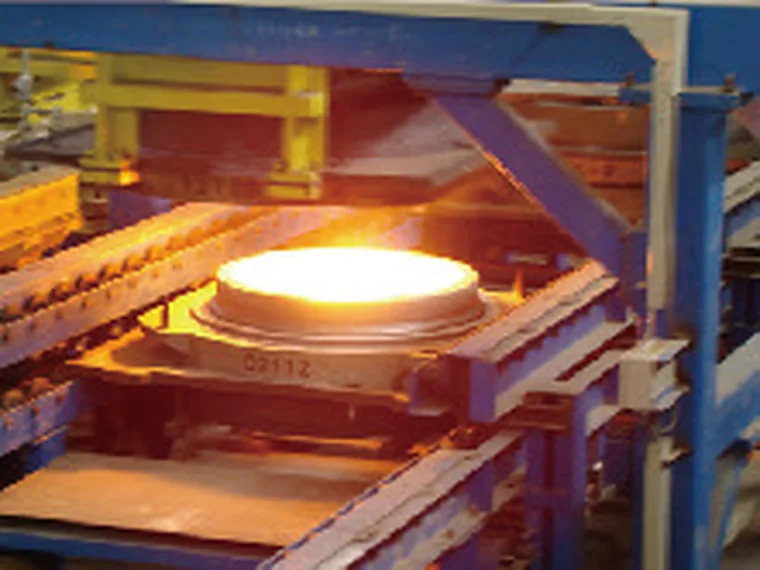
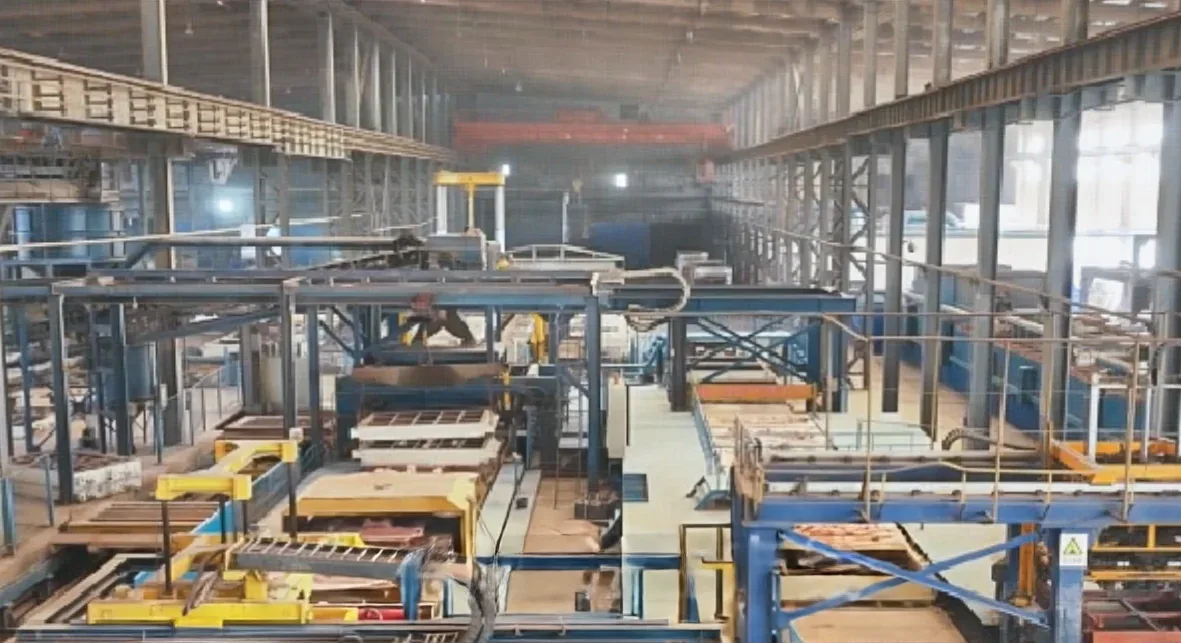
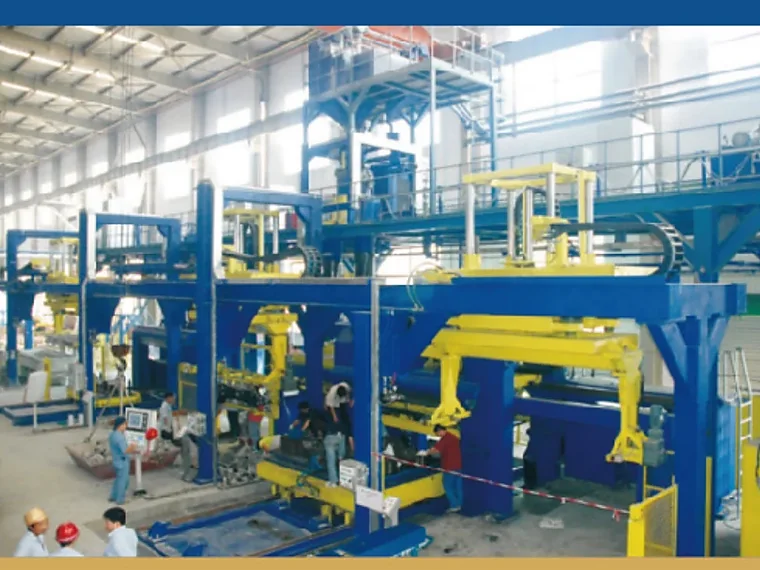
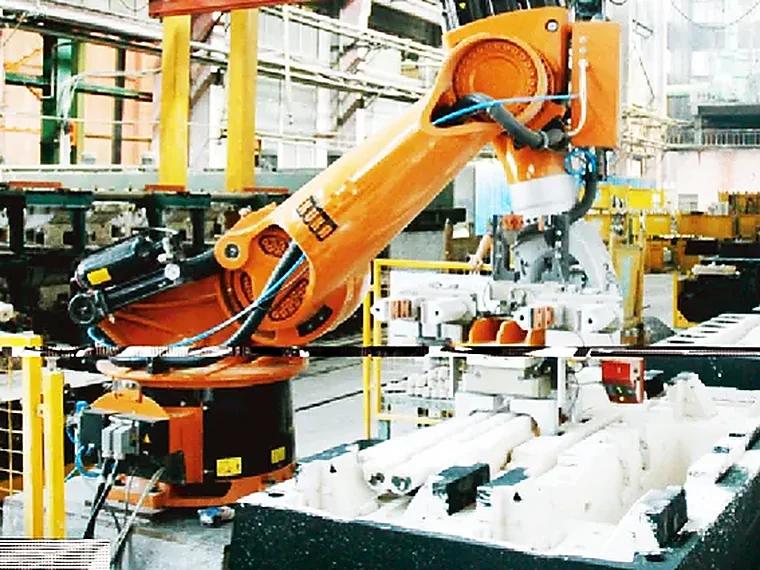
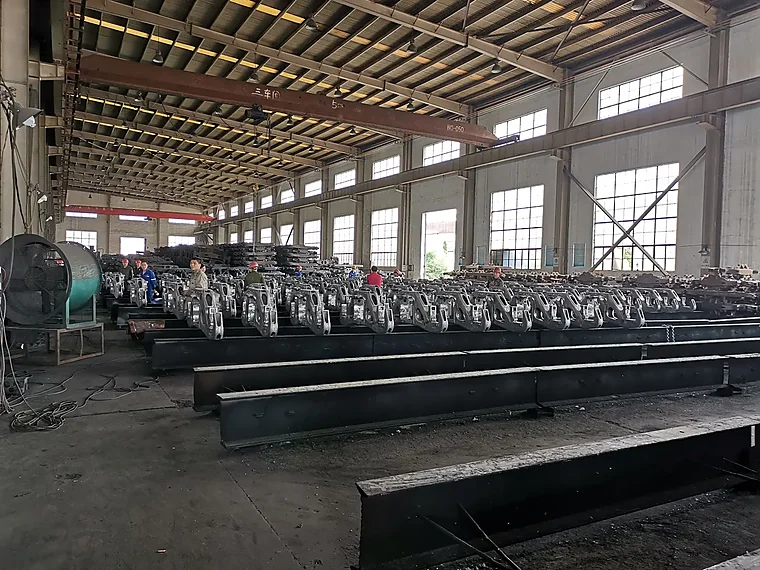
Safety-critical heavy railway castings demand uniform wall thickness and repeatable geometry, and both begin at the mold. The route behind every casting we supply is centered on an imported German HWS automated V-process vacuum sand casting line with an indicated annual capacity of 100,000 tonnes, inside a works in our production network rated at 300,000 tonnes a year across four plants. Working as a railway casting mill rather than a general foundry, we run melting, moulding, heat treatment and machining under one quality system, and casting simulation for mould filling and solidification is settled on the pattern before tooling is cut, so wall thickness, riser placement and shrinkage are fixed before the first heat is poured., supplemented by four medium-sized V-process molding lines and two automated MLE150H core shooting lines. The wheel programme runs on its own fully automated MLE65C line, where casting, machining, heat treatment and in-line monitoring are carried out as one flow rather than as separate batch transfers, which is what keeps a wheel programme on a repeatable cycle from the first heat onward.
The V-process (vacuum molding) consolidates unbonded dry sand under negative pressure so that no chemical binders are used. This eliminates binder-related gas defects, yields an exceptionally clean casting surface, and holds strict dimensional tolerances on complex parts such as side frames, bolsters, brake heads and bearing adapters. The indicated annual capacity on the HWS V-process line supports both high-volume repeat programmes and mixed batch runs.
02
Melting and Duplex Refining (EBT+LF)
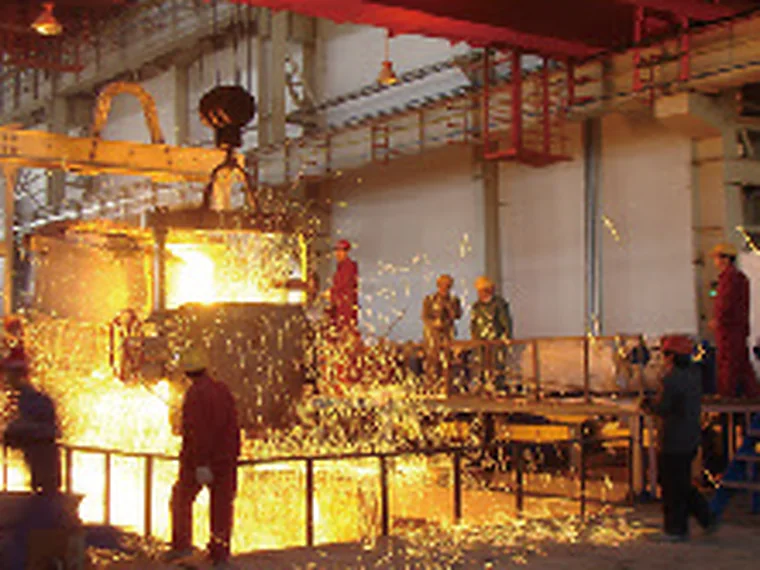
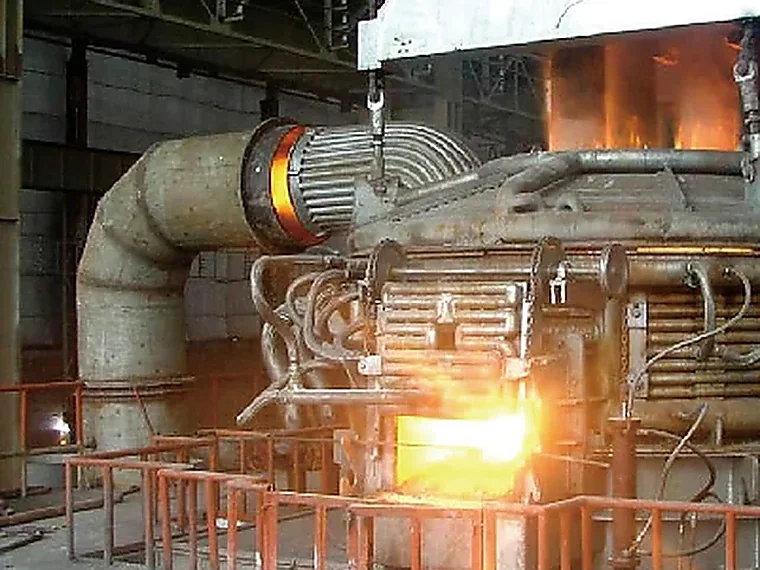
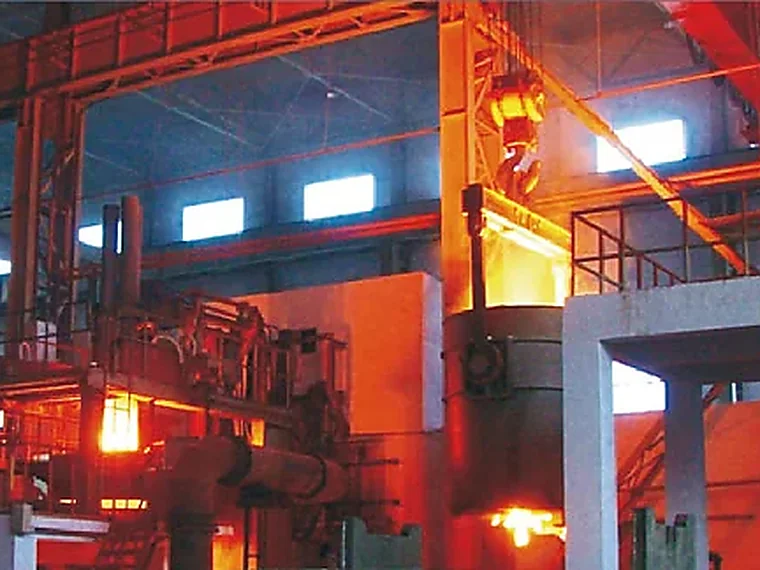
Metallurgical purity starts in the furnace. Molten steel is primary-smelted in eccentric bottom tapping (EBT) electric arc furnaces, which reduce phosphorus and sulfur pick-up during tapping, then secondary-refined in ladle furnaces (LF). The melting shop is equipped with four EBT-25T and four EBT-15T eccentric bottom tapping furnaces, two LF-25T and four LF-15T refining furnaces, and an LF-30T furnace, so a heat can be routed to the refining vessel that matches the section size rather than queued for a single large ladle. This EBT+LF duplex refining route gives controlled chemistry, low dissolved gas and consistent inclusion levels across AAR Grade B+, Grade C and Grade E steels as well as GOST 20GFL and 20GL low-temperature grades. Tight compositional control at this stage is what lets thick-walled castings later pass 100% volumetric inspection rather than relying on surface checks alone.
03
Pouring and Controlled Solidification
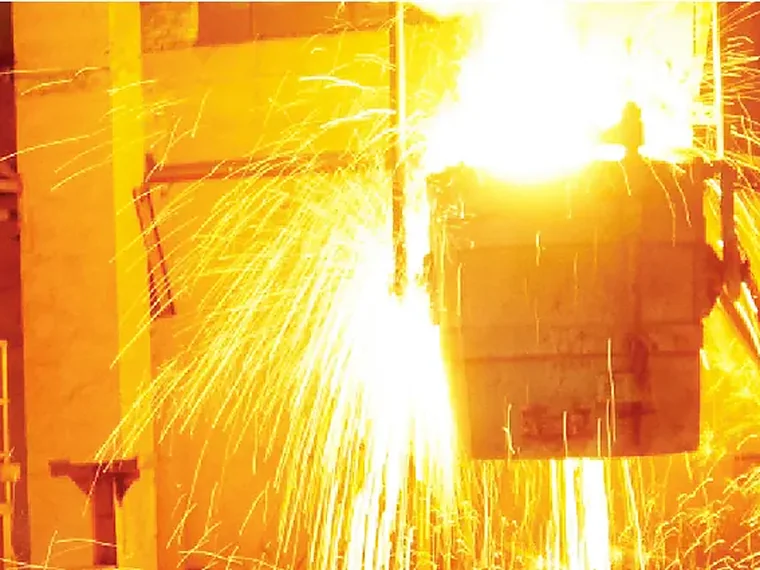
Pouring and feeding are planned around each part's solidification profile. For thick cross-sections such as bolsters, side frames and draft gear housings, riser and feeding design targets directional solidification so that shrinkage is drawn into risers rather than left inside the section. The same feeding logic applies to the thinner ribbed underframe parts: the follower seat, welded to the centre sill draw beam as the static base for the draft gear, is fed so that its mounting face stays flat, and the coupler striker behind the coupler is fed as a solid block because it carries draft and impact loads into the drag box. Graphite-mould sequential solidification is applied where the geometry requires it, forcing a controlled, progressive freeze that reduces micro-porosity and internal stress. These measures are part of why internal soundness is verified by 100% volumetric scanning on a 9MeV industrial CT/DR system rather than sampled radiography.
04
Heat Treatment: Normalized and Tempered
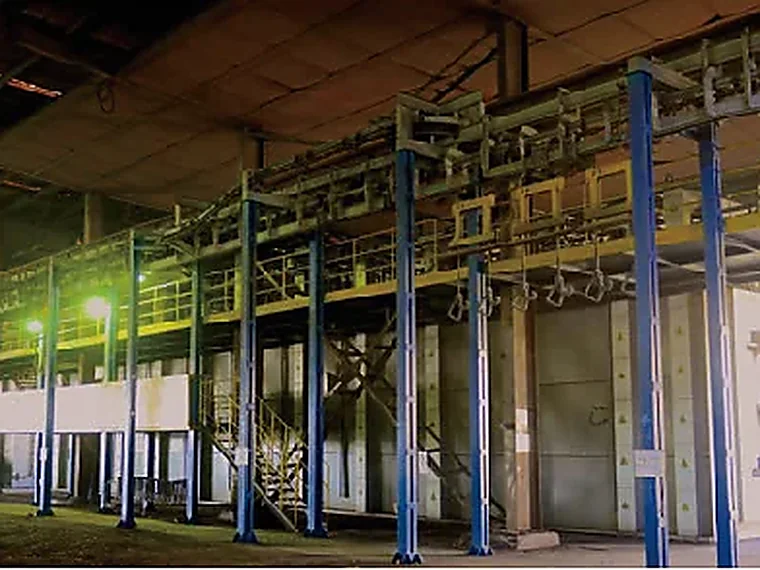
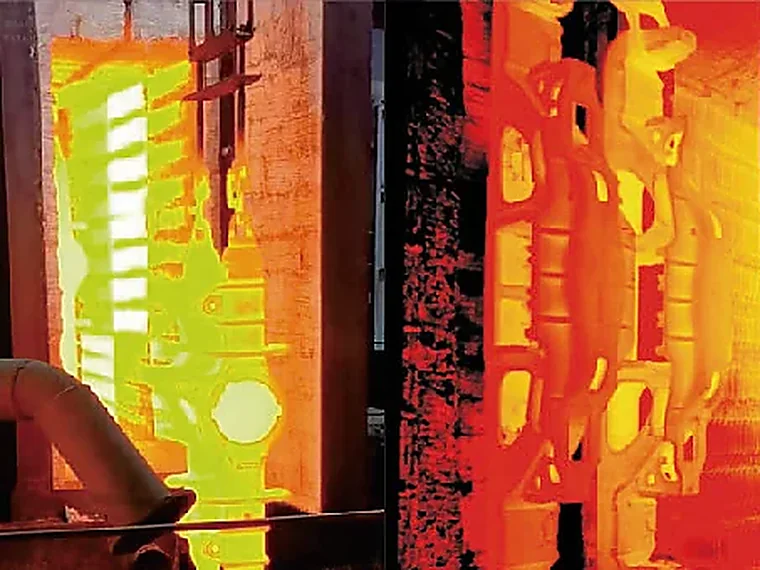
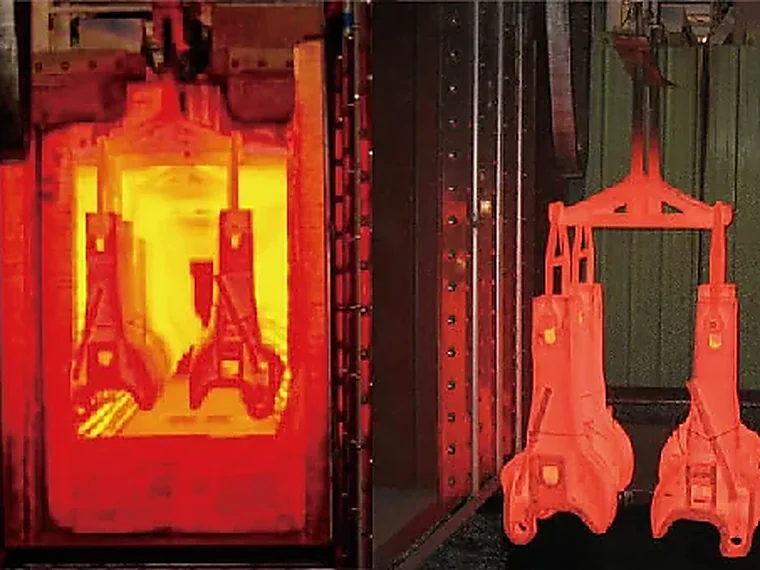
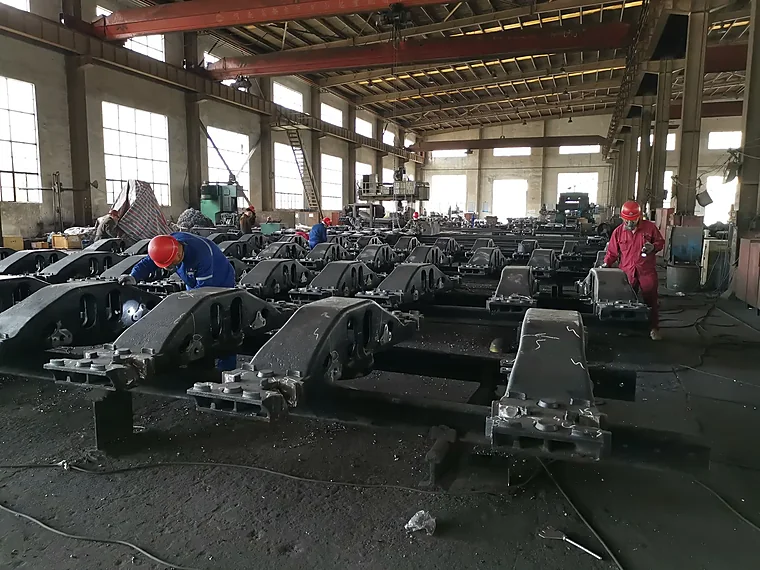
After shake-out and cleaning, safety-critical components are heat treated to reach the specified mechanical properties. The standard route is normalized and tempered, which refines the microstructure and relieves casting stress while delivering the strength and toughness called for by AAR and GOST specifications. Coupler-grade parts in Grade E steel receive the micro-controlled quenching and tempering needed for draft and impact loads. Every heat is recorded with its heat number, and automated heat-treatment curves are archived as part of the factory-issued material certificate, fully compliant with EN 10204 3.1. The heat treatment furnaces run on electrical heating, so the furnace temperature control reaches +/- 3 degrees C and the cooling rate holds the specified microstructure across the section rather than drifting with the furnace charge. The heat treatment shop holds three suspended chain type continuous lines, two push rod type continuous lines, and 18 trolley-type electric heating furnaces of 940 kW, with a dedicated continuous line for coupler castings and separate lines for bolsters, side frames and axle housings, so a section with a long cycle does not hold up a shorter one.
05
Cleaning, Shot Peening and Dimensional Control
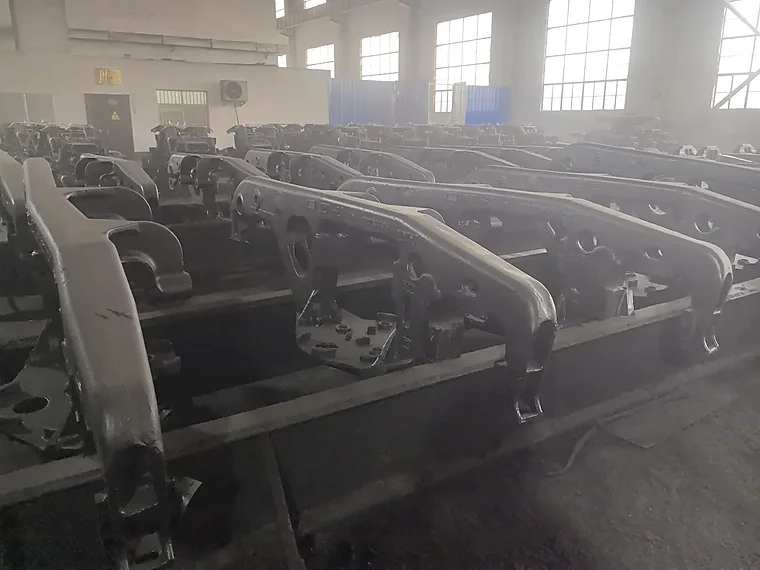
Following heat treatment, castings are shot blasted and, where specified, shot peened to improve surface condition and fatigue resistance at critical fillets. Dimensional control checks key mounting faces — adapter arcs, center-plate friction faces, coupler contours — against the drawing before machining. Out-of-tolerance areas are mapped so that CNC machining removes only the planned stock, keeping machining cost and cycle time predictable for global buyers.
06
CNC Machining and Finishing
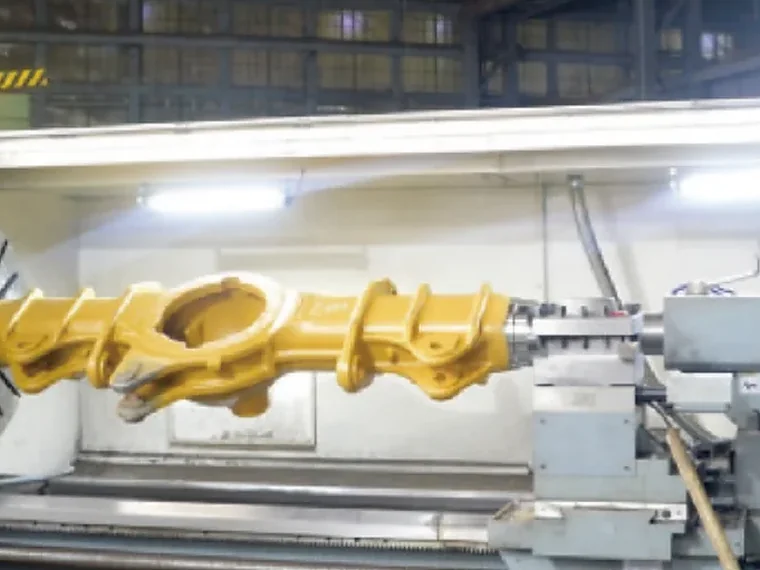
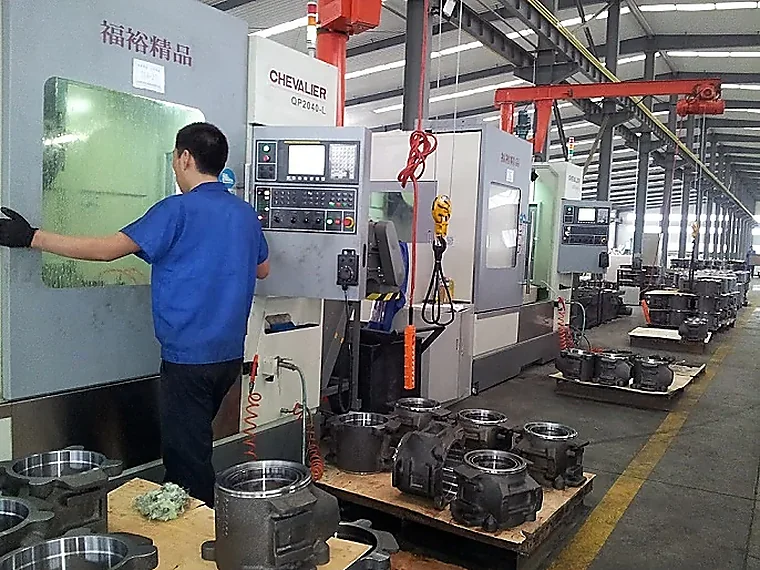
Finished geometry is achieved on dedicated CNC special machine tool groups that establish precise machining tolerances on mounting and sealing faces. The mass production shop runs ten combination machine tools and ten CNC machining centres, which together hold an output of about 900 pieces per day, and the axle housing line runs on the same principle with an annual output of 75,000 tonnes of cast steel axle housings. Machining is aligned to the same material code and standard framework used in blueprint translation, so a part drawn to AAR, GOST, EN or CRCC is finished to the same datum the buyer expects. Machined surfaces are then protected with anti-rust coating ahead of export packing, and each piece carries its individual serial number for lifecycle traceability.
07
Process Control and Traceability
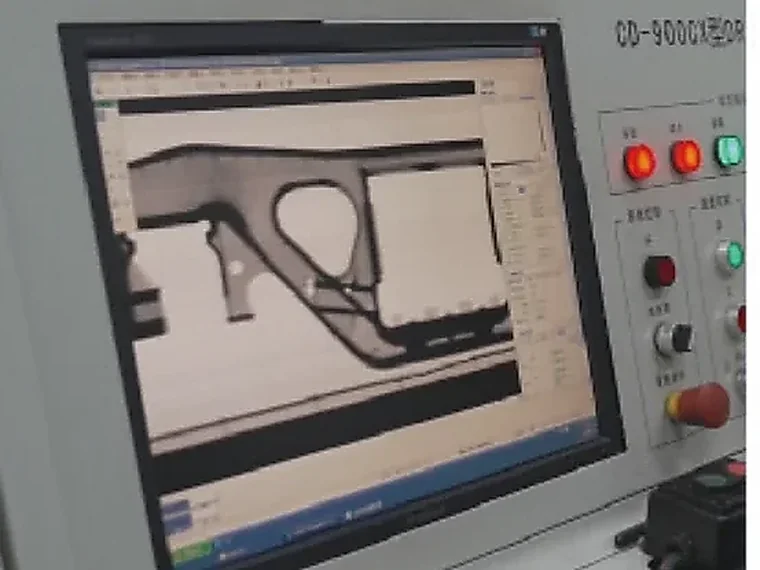
Every casting programme is documented from pattern to dispatch. Heat number, heat-treatment curve, NDT results and final inspection are consolidated into the factory material certificate compliant with EN 10204 3.1 record, and volumetric CT/DR scans back the internal soundness claim with full-section evidence. The scanning is done on a CD-900CX industrial DR imaging system at 9MeV, and the works operate their own physical and chemical testing centre and high-energy ray testing centre alongside a metallographic laboratory, a mechanical testing laboratory and a spectrometer, so chemistry, tensile, yield, Charpy impact, hardness, wall thickness and ONH gas content are all measured in-house and released on the same record. UT, MT and PT cover volumetric and surface or near-surface defects, every casting carries an individual serial number, and each released heat is traceable to its heat number and archived heat-treatment curve. Indicative lead time and MOQ are provided in the quotation and fixed upon order confirmation. For the inspection systems behind these records, see our railway casting quality inspection page.
FAQ
What is the V-process used for in railway casting?
The German HWS V-process is a vacuum sand casting method that consolidates dry sand under negative pressure with no chemical binders, giving complex bogie and coupler components a clean surface and tight dimensional control before heat treatment and machining.
Why use EBT+LF duplex refining for railway steel?
Eccentric bottom tapping (EBT) electric arc furnaces primary-melt the steel, then ladle furnaces (LF) secondary-refine it for metallurgical cleanliness and low dissolved gas — key to the internal soundness verified later by 9MeV CT/DR scanning.
Who guarantees the castings we receive?
All of it, and it sits with the plant by contract. The plant melts the steel, runs the heat treatment, performs the NDT and signs the certificate, so a failure at any of those stages is caught there and corrected there — on its own equipment, under its own process control and at its own cost — before the casting is loaded for shipment. Quality responsibility does not transfer to you on delivery. SIMIS then guarantees the plant: we hold the supply and sales relationship, we control the release documentation, and we carry the delivery obligation and the after-sales response to you. A plant's signature on the certificate is only worth something if somebody on your side can enforce it — that is the part we take.
How are safety-critical castings heat treated?
Bogie and coupler components are normalized and tempered to reach the specified mechanical properties, then verified by factory material certificate compliant with EN 10204 3.1 with heat number and serial-number traceability. For a technical question, contact Felix at sales@simisrail.com or +86-13934165890.
Railway wheels
Cast Steel Wheel Production
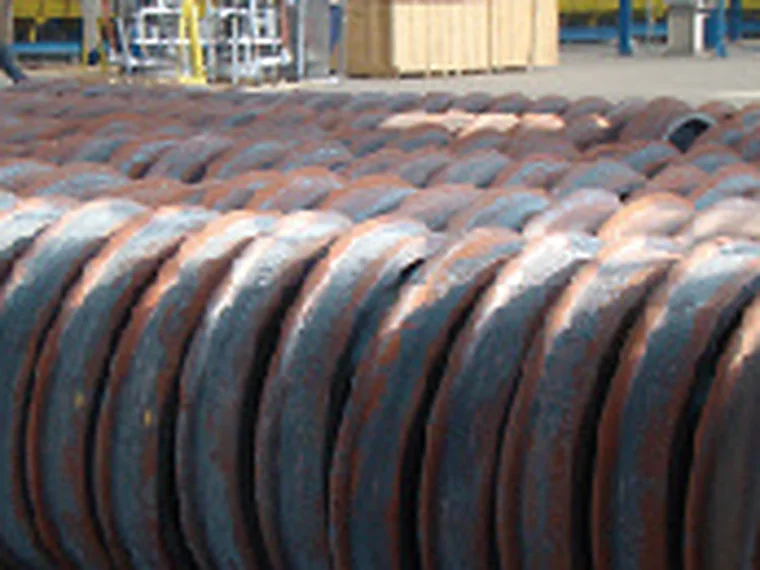
Dedicated wheel production and machining: single wheels and composite wheel centres are cast, heat treated and machined in the wheel shop.
Process feature of the wheel production
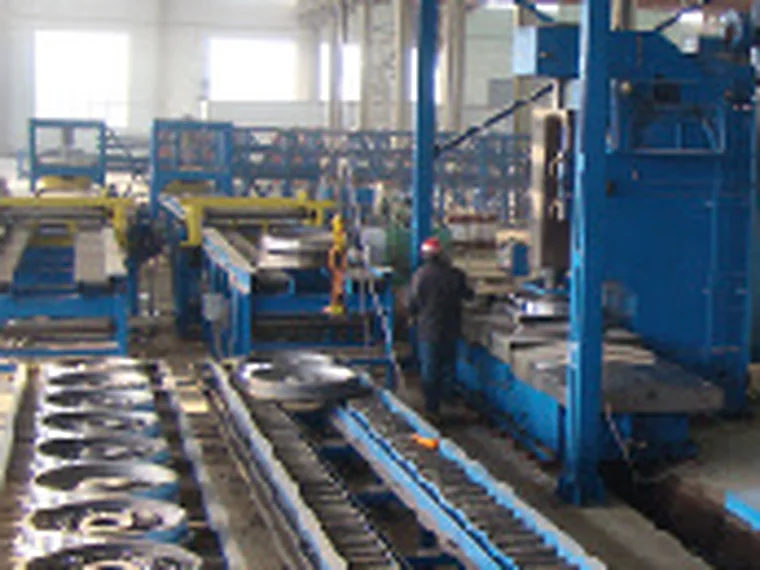
Wheels are cast with a graphite hanging sand liner as the mold used in wheel casting, so the wheel achieves complete sequential solidification. The hot metal used for pouring is smelted by the electric arc furnace and then refined through the LF furnace, so metal purity is improved. The manufactured cast steel wheel has a single serial No., which laid the foundation of the wheel information tracing system.
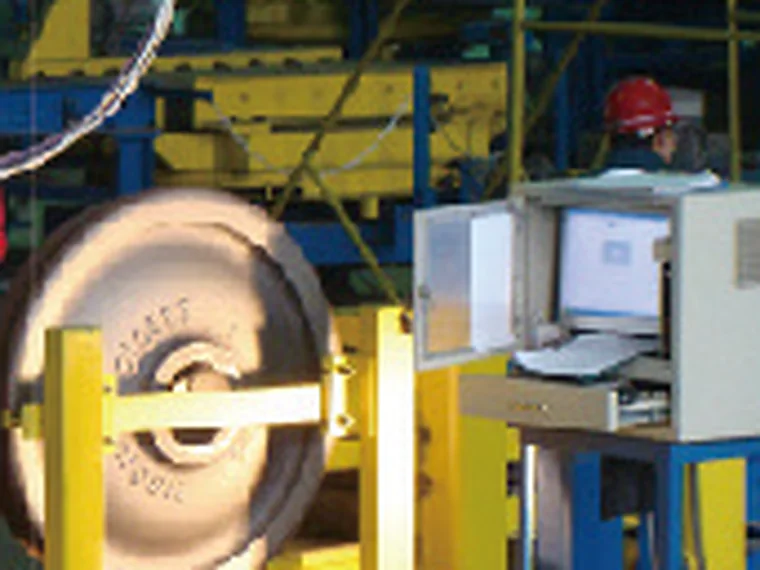
The heat treatment furnace adopts the electrical heating method, so the control precision of the furnace temperature is higher and can reach ±3°C. The wheel machining tools are all numerical control special machine tools, so the reproducibility of the machining dimension is assured. With large-scale online non-destructive testing equipment (DR, CT), complete sets of inspection equipment and advanced testing technology, every wheel is verified before it leaves the plant.
The wheel shop was built with a total investment of RMB 460 million, close to USD 65 million, and runs more than 1,800 sets of production equipment on the graphite mold sand casting process, with an output of up to 300,000 heavy-haul high-speed cast steel wagon wheels a year. AAR wheel quality certification was obtained in 2008.