SIMIS
Railway Casting Quality Inspection, NDT and Material Certification
Railway casting quality inspection with a 9MeV industrial CT/DR system, UT, MT (MPI) and PT with CMM dimensional inspection, under ISO, CRCC, AAR M-1003 and RS FZHT certified quality management systems, with heat-by-heat factory material certificates.
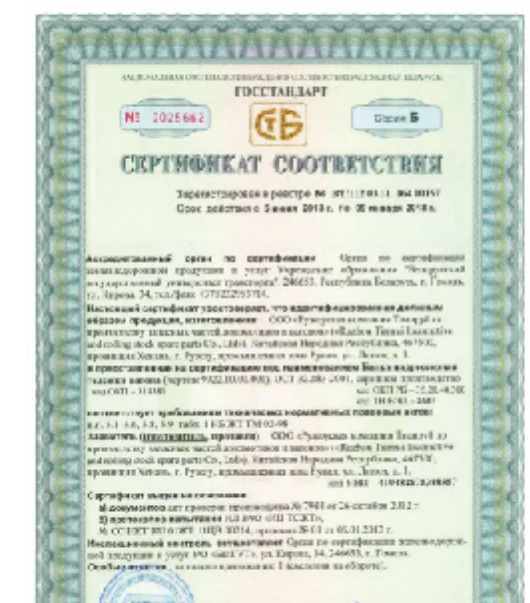
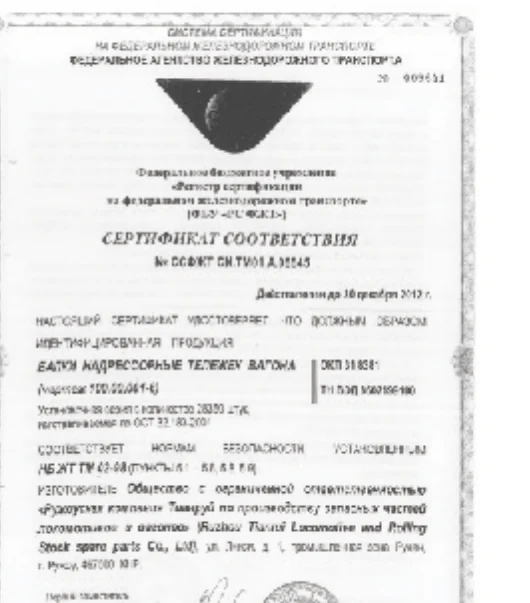
Certified Quality Management Systems
Railway casting production is governed by strict quality-system requirements, and different countries audit suppliers through their own frameworks — AAR M-1003 in North America, CRCC in China, RS FZHT (P SSFZhT 45) in Russia and the ISO management-system standards worldwide. Buyers looking for an AAR M-1003 certified railway casting manufacturer, a CRCC-certified railway castings supplier in China, an ISO-certified railway casting foundry or an RS FZHT-certified railway parts factory can source from one production base: all of these quality management system certifications are held at plant level, together with the product certificates required for specific programmes. The production behind them is not a small workshop: a strategic manufacturing network of railway casting works, the principal site comprising four plants on about 1.68 million square metres, more than 1,500 employees, and a rated annual casting capacity of 300,000 tonnes.
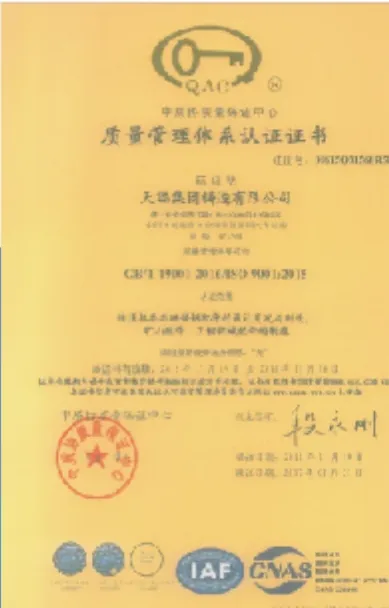
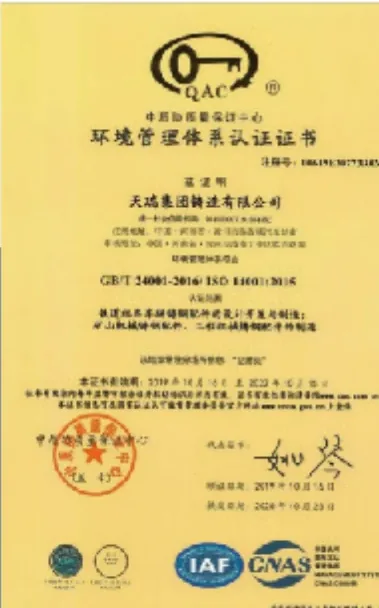
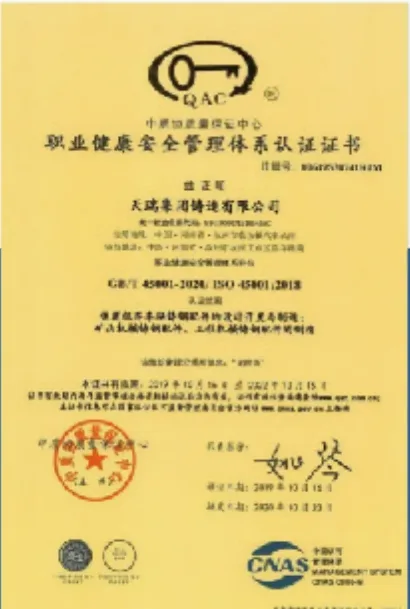
- ISO 9001:2015 / ISO 14001:2015 / ISO 45001:2018 — the ISO three-system certificates covering quality, environmental and occupational health & safety management for the casting plant.
- CRCC certification (China Railway) — the quality system certification for railway products issued by the China Railway Test & Certification Center, required of railway rolling-stock part suppliers in the Chinese market.
- AAR M-1003 Certified Quality Management System — granted by the Association of American Railroads and maintained through audit by AAR auditors; the North American system-level credential for heavy-haul castings.
- RS FZHT (P SSFZhT 45) — the Russian Railway Register quality system certification for the production of railway parts, supporting GOST-referenced programmes for the Russian and CIS markets.
These are system-level credentials that govern how melting, heat treatment, inspection and records are controlled across the production base; they are never presented as product or casting approvals. The same disciplined framework underpins every GOST and CRCC-referenced programme we deliver. Copies of the certificates and the current audit status are available on request before an order is placed.

Quality Inspection Workflow
Every safety-critical casting moves through a defined inspection chain rather than a single gate. After heat treatment and cleaning, parts are checked for surface condition and dimensional key faces, then routed to non-destructive testing, volumetric scanning where required, and finally to the certification desk. Results are logged against the heat number and serial number so that any delivered component can be traced back to its melt, heat-treatment curve and inspection record. Internal soundness is verified by 100% volumetric scanning on thick sections, not by sampling alone.
NDT and Volumetric Inspection
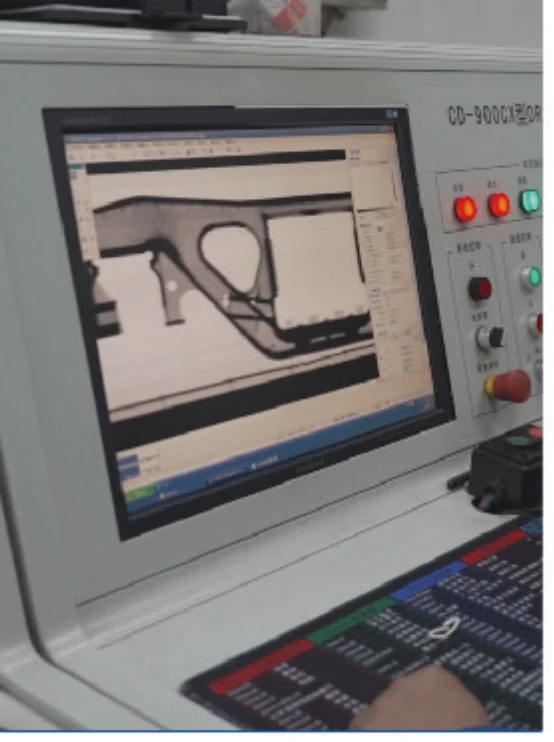
Conventional low-energy radiography cannot fully penetrate thick alloy steel, leaving hidden shrinkage or micro-cracks undetected. Production operates a 9MeV industrial CT/DR system that scans 100% of the interior volume of massive components such as side frames, bolsters and draft gear housings, eliminating internal flaws that could cause field failures. Surface and near-surface integrity is covered by UT (ultrasonic), MT (magnetic particle) and PT (penetrant) testing. Because different countries and regions specify different acceptance requirements for railway castings and railway vehicle parts, NDT is applied to the standard named for the buyer's market — AAR M-220 for North American programmes, GOST requirements for Russian and CIS programmes, TB/T and CRCC-referenced specifications for the Chinese market. Method, extent and acceptance levels are agreed at order stage and recorded in the inspection report.
Dimensional Verification with CMM
Critical mounting and sealing faces are verified on coordinate measuring machines (CMM) against the translated drawing datum. Adapter arcs, center-plate friction faces, coupler contours and axle-box wheel bore diameters are measured to the agreed tolerance so that the part fits the buyer's assembly without rework. CMM reports are retained with the batch record and can be supplied alongside the material certificate on request.
Material Certification
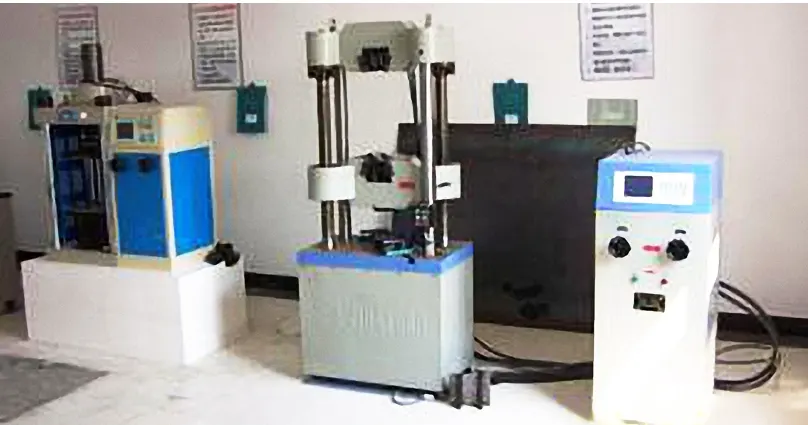
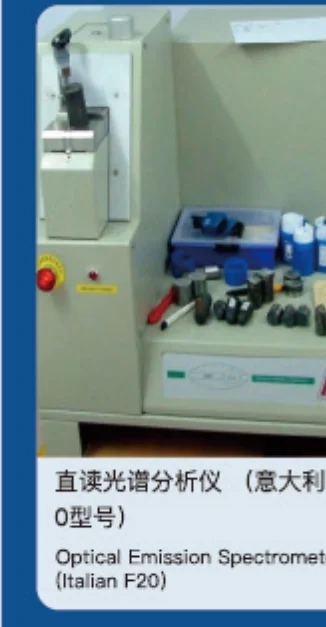
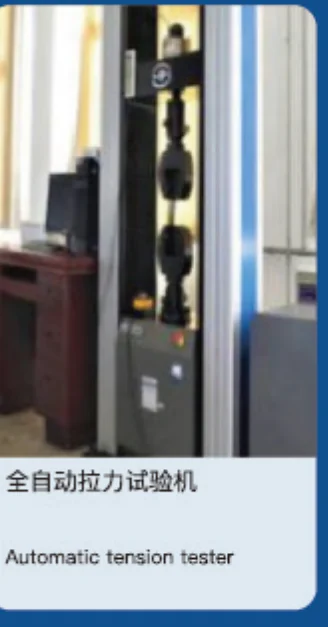
Every batch is supplied with the factory-issued material certificate on the plant's own document form. The certificate lists the actual chemical analysis and mechanical test results of the relevant heat (not generic reference values), linked to heat numbers and individual casting serial numbers for full traceability from melting to finished component. The documentation covers the core traceability information required by EN 10204 Type 3. Together with archived heat-treatment curves and NDT reports, these records allow buyers and third-party inspectors to verify compliance with the specified mechanical requirements.
Standards and Approvals on File
- Certified quality management systems — ISO 9001:2015 / ISO 14001:2015 / ISO 45001:2018 (the ISO three-system certificates), CRCC quality system certification for railway products in China, AAR M-1003 Certified Quality Management System (granted by the Association of American Railroads and reviewed by AAR auditors) and RS FZHT (P SSFZhT 45) certification for the production of railway parts. All are plant-level system certifications, not product certifications.
- AAR specification manufacturing — bolsters, side frames, yokes, knuckles and wheels cast and tested to AAR M-202, M-203, M-205, M-211, M-215, M-216 and M-107 / M-208 as cited on the buyer's drawing. Product-level approval status is confirmed per programme at quotation stage.
- GOST specification manufacturing — GOST 32400-2013 for 18-100 side frames and bolsters, GOST 977-88 steel castings, with 20GFL low-temperature impact records per heat lot.
- CRCC and TB/T drawing route — China railway and CRCC-style drawings translated and manufactured to the cited clause; qualification status for a specific programme is confirmed in writing before order acceptance.
- EN-referenced drawings — European railway standards such as EN 13749, EN 13262 and EN 12080 are reviewed per project; manufacturing scope, test plans and conformity evidence for EN-referenced programmes are confirmed in writing before order acceptance.
Frequently Asked Questions
Is AAR M-1003 a product certification?
No. AAR M-1003 is a plant-level quality management system certification. Production runs under an AAR M-1003 Certified Quality Management System reviewed by AAR auditors; it controls process and records rather than approving any single casting model.
Do you offer third-party inspection?
Yes. The factory-issued material certificate, heat-treatment curve and NDT report support third-party verification, and we coordinate independent inspection at the buyer's request before shipment.
How is internal soundness proven, not just claimed?
Thick sections are verified by 100% volumetric scanning on a 9MeV industrial CT/DR system, with UT/MT/PT covering surface and near-surface zones — evidence is recorded per heat number and serial number, not stated as a generic promise. For a technical question, contact Felix at sales@simisrail.com or +86-13934165890.
On the shop floor
Inspection Equipment and the Test Laboratory
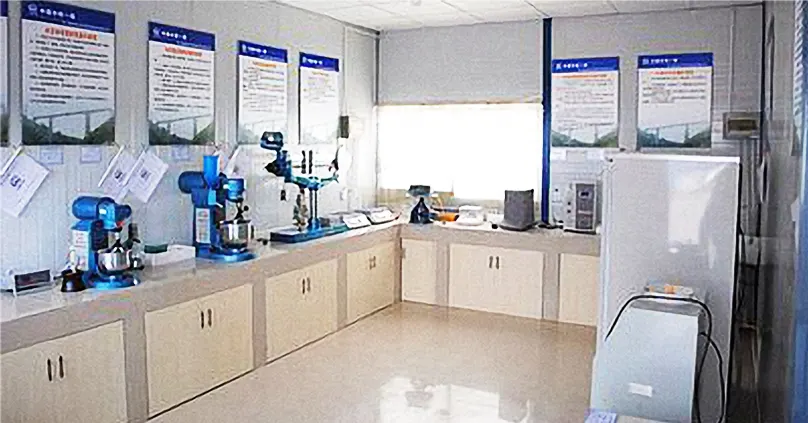
The machines behind the numbers: every mechanical and chemical result in the quotation is produced by the equipment shown here.