
Product
Brake Rigging Castings
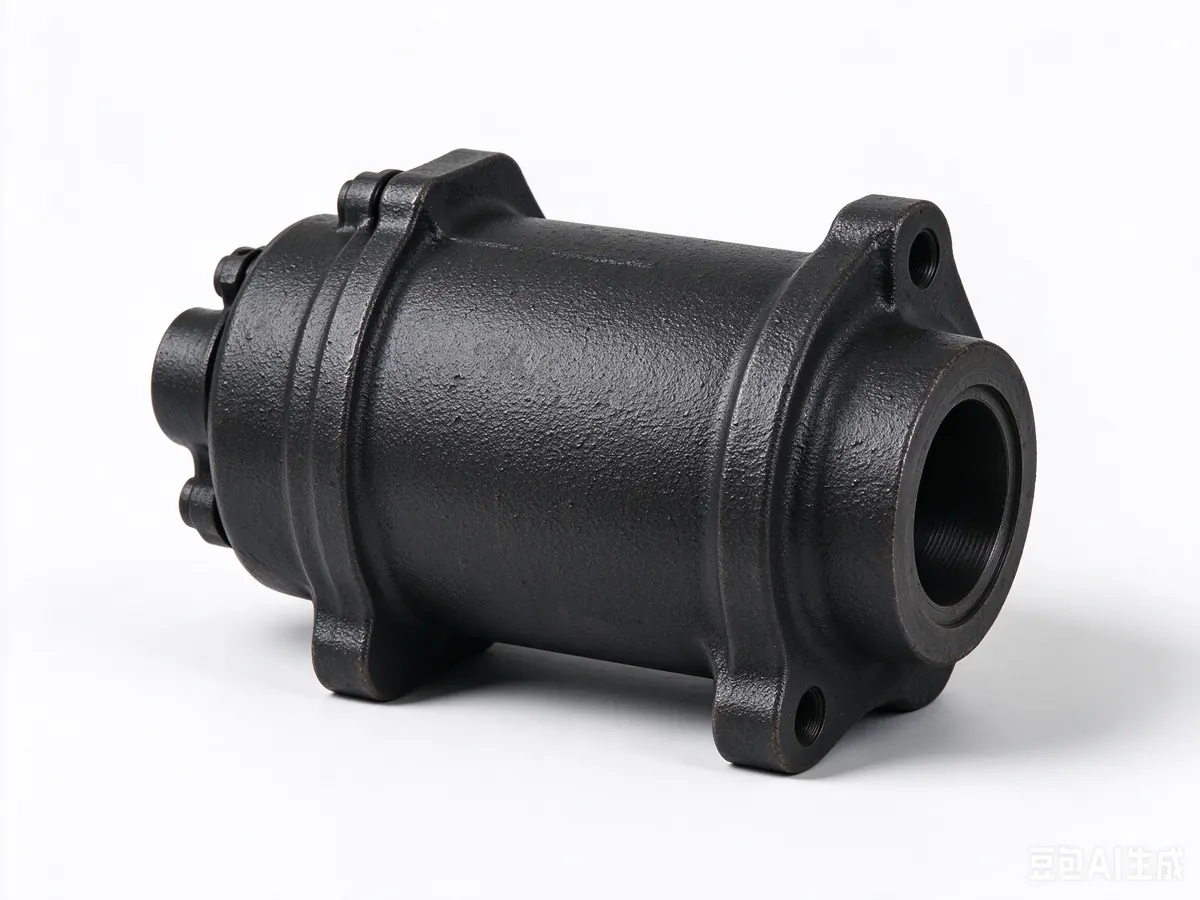
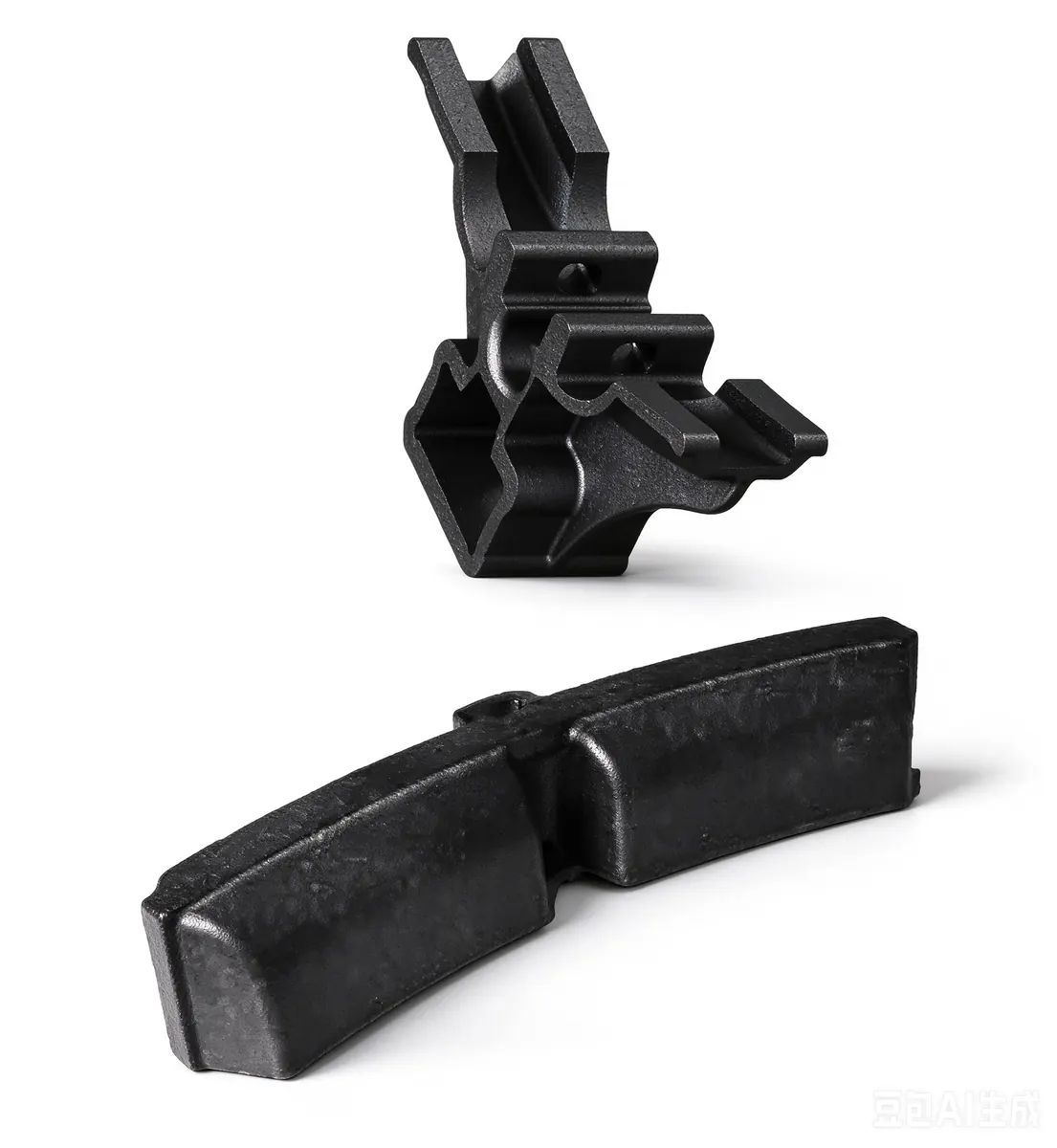
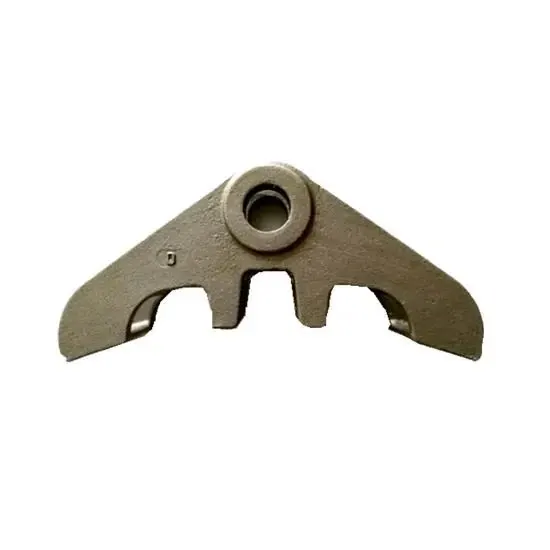
Brake rigging castings: brake levers, pull rod bodies and slack adjuster housings for freight wagons. Lever ratio verified on CMM, factory material certificate.
Brake Rigging Castings for Freight Wagons
A brake rigging casting is the linkage part that transfers brake cylinder force to the brake beam: brake levers, pull rod bodies and slack adjuster housings. As a brake rigging casting factory, SIMIS Precision Casting Co., Ltd. in China produces these in cast steel ZG270-500 and ZG230-450 to AAR M-201 Grade B, normalized and tempered, with lever geometry verified on a CMM and the factory material certificate, compliant with EN 10204 3.1 issued per batch. These castings serve North American and South American freight wagon programmes.
Technical Parameters
| Item | Specification |
|---|---|
| Material | ZG270-500 and ZG230-450 (cast steel, AAR M-201 Grade B) |
| Process | Resin sand and shell mould casting, normalized and tempered |
| Standards | AAR M-201, TB/T 2942.1-2020 |
| Documentation | Factory-issued material certificate, fully compliant with EN 10204 Type 3 content, issued with each batch against the heat number |
| Typical rigging parts | Brake levers, pull rod bodies, slack adjuster housings |
| Lead time (indicative) | Confirmed in the quotation |
| MOQ | Indicative, confirmed in the quotation |
Levers, Rods and Slack Adjuster Housings
| Feature | Brake lever | Pull rod body | Slack adjuster housing |
|---|---|---|---|
| Function | Sets lever ratio | Transmits pull force | Takes up shoe wear |
| Critical geometry | Hole-centre ratio | Length and straightness | Thread and ball seat |
| Verification | CMM lever ratio | CMM dimensions | Thread gauge |
Equivalent Material Grades
Brake castings split into two groups by duty. The structural parts that carry the brake beam load use cast steel, while the cylinder and hand brake housings are commonly supplied in ductile iron to reduce cost. This table maps each group onto the corresponding AAR, EN and Chinese grade.
| Casting / Application | Standard system & grade | Tensile / Yield | Elongation | Impact | Chinese grade | Russian grade | Note |
|---|---|---|---|---|---|---|---|
| Brake beam end | AAR M-201 Grade B | 485 MPa / 260 MPa | 24% | - | ZG230-450 | GG25 / QT450-10 | One-way and two-way brake beams |
| Brake shoe holder | AAR M-201 Grade B | 485 MPa / 260 MPa | 24% | - | ZG230-450 | GG25 / QT450-10 | Brackets with matched wear inserts |
| Brake cylinder body | AAR M-201 Grade A | strength not critical | - | - | ZG230-450 | QT450-10 ductile iron | 10 in and 12 in sizes |
| Brake lever and pull rod | AAR M-201 Grade B | 485 MPa / 260 MPa | 24% | - | ZG270-500 | - | Lever ratio geometry is critical |
| Slack adjuster housing | AAR M-201 Grade A | strength not critical | - | - | ZG230-450 | QT450-10 | Ball and thread type |
| Hand brake housing | AAR M-201 Grade A | strength not critical | - | - | ZG230-450 | QT400-18 / HT250 cover | Manual parking brake gear |
Important. Ductile iron substitution is offered for cost sensitive fleets only where the buyer accepts the substitution in writing. Structural brake parts stay in cast steel.
Material and Manufacturing Process
Brake rigging castings are produced by resin sand and shell mould casting from ZG270-500 and ZG230-450 cast steel, then normalized and tempered to the AAR M-201 Grade B levels. The pin holes and lever arms are CNC machined so the lever ratio matches the wagon. Our article on common railway casting defects explains how shrinkage at heavy sections is controlled during feeding.
Traceability and Documentation
Each brake rigging casting carries a heat number and an individual serial number. Each consignment carries the factory-issued material certificate, fully compliant with EN 10204 3.1, released by the works that melted and heat treated the casting and passed with the shipment covering chemistry, mechanical results and NDT. For a matched rigging set, the lever, rod and slack adjuster are linked to one heat lot and the measured lever ratio is recorded so a later replacement can be matched from the drawing or casting identification number.
Quality Verification
Internal soundness is verified by 9MeV industrial DR/CT volumetric scanning before machining. After machining, the lever ratio and rod geometry are checked on a CMM, and the surfaces are inspected by UT and MT. Any indication outside the acceptance band is recorded before the part is released.
Regional Applications
In North America, brake rigging is supplied to AAR M-201 Grade B rebuild specs with the lever ratio documented. In South America, operators use the levers and slack adjuster housings for mixed fleets where rigging geometry must stay within the original design window.
FAQ
What is a brake rigging casting and what does the lever ratio change? A brake rigging casting is the lever, pull rod body or slack adjuster housing that transfers brake cylinder force to the brake beam. The lever ratio sets how much shoe force results from a given air pressure; SIMIS verifies the ratio on a CMM so the delivered castings match the wagon design.
How is brake rigging geometry verified before shipping? Brake rigging geometry is verified by measuring the lever and rod hole centres on a CMM against the drawing. SIMIS records the measured lever ratio and dimensions on the factory material certificate compliant with EN 10204 3.1, and any out-of-tolerance feature is corrected or rejected before the casting is released.
Are slack adjusters supplied separately or as part of the lever? Slack adjusters are supplied as separate cast housings, while the lever and pull rod are separate brake rigging castings. SIMIS can coordinate the matched set from one heat lot so the assembled rigging fits the wagon, and notes the relationship on the quotation.
Related Products and Resources
Request a Quotation
Send the brake rigging drawing, drawing number or part number to sales@simisrail.com, with the linkage type and the wagon type it works with. Engineer Felix confirms the inquiry within 1 working day and returns a quotation within 3 working days, with indicative lead time and MOQ confirmed in the quotation. As a China brake rigging casting supplier, we supply a matched lever, rod and adjuster set from one heat lot where the order calls for it.
Related products