
Sourcing & markets
Railway Casting Factory vs Trading Company: What Changes for Your Order
Factory or trading company? Four things change with your order: drawing review, material certificate and NDT signatures, tooling cost, and who carries delivery risk..
Published: · Last updated: · Reviewed by Wang Jinhai
The difference between a foundry that pours the castings and a trading company is visible in four places where responsibility actually sits: who translates the drawing and assesses manufacturability, who issues the material certificate and the NDT report, who carries the cost of the pattern and the first article, and who is accountable for delivery and for a claim when a casting does not conform. Both routes can deliver castings that meet a drawing. What changes with your order is which party owns each of those four steps, and therefore who you can hold to the specification.
The Four Differences That Change Your Order
| Step in the order | With the foundry that pours the castings | With a trading company |
|---|---|---|
| Drawing review and manufacturability assessment | Done by the engineers who will pour the part | Done by the foundry on the intermediary's instruction, through a second channel |
| material certificate and NDT report | Signed and issued by the foundry that melted and inspected the casting | Issued by the underlying foundry and passed through the intermediary |
| Pattern and first article cost | Quoted as a separate tooling and development item | Often folded into the piece price, or raised later as an amendment |
| Delivery and non-conformance liability | With the manufacturer named on the order | With the intermediary, which then negotiates with its own foundry |
None of this makes one route and not the other acceptable. A trading company that inspects each factory, checks the documents and takes the claim risk itself can be a reliable partner. The point is that the arrangement should be known before the order is placed, because each arrangement has a different answer to the question of who is responsible when something is wrong.
Technical Mechanism: Where the Work and the Liability Actually Sit
Drawing review is the first point of difference. A foundry reads a drawing against its own process: wall thickness, parting line, fillet radii, gating and feeding, machining allowance, and whether the part can be poured in one piece with the section it needs. The manufacturing process page sets out the routes behind this assessment. When that assessment happens inside the company that will pour the casting, the consequences are direct: a drawing change can be priced and scheduled the same day.
Certification is the second. An EN 10204 3.1 material certificate and an NDT report are only meaningful when the issuer performed the melting, heat treatment and inspection. A foundry signs its own. A trading company forwards the foundry's document, so a buyer should read the certificate to see which manufacturer it names, and check that the heat numbers on the certificate match the markings on the parts received.
Tooling is the third. A pattern or a graphite die is made to one customer's drawing, and it is that customer's asset and that customer's cost. Factories normally quote pattern development as a separate line, sometimes with the amortised cost carried in the piece price; intermediaries often do the same but describe it differently. Either way the practical test is simple: ask in writing who owns the tooling after the first production batch, and what happens to it if the programme ends or moves.
Delivery risk is the fourth. A casting that arrives out of tolerance, short of the required certification, or late is a problem the contract must allocate. With a factory, the party accepting the order is the party that poured and inspected the casting, so the remedy is direct. With a trading company, that party holds the customer contract while the foundry sits beneath it, so the buyer should establish how non-conforming castings, rework and late delivery are handled, and which documents accompany a shipment, before the purchase order is signed. The railway casting RFQ checklist form is a practical place to record these points.
Production Equipment and Process Control
Where does SIMIS sit on this table? Precisely, because precision is the whole point of this article. The castings we supply are poured, heat treated, inspected and certified within our production network, and the certificate is signed by the works that melted and inspected the part — which is exactly what makes those documents worth reading. Every quality issue sits with that works, in full, at its own cost, and quality responsibility does not transfer to the buyer on delivery. What we add sits between that works and you: the drawing translation and manufacturability assessment, the material code alignment across AAR, GOST, EN and TB/T, the commercial negotiation, the export documentation, and the delivery obligation and after-sales response that stay with us. So the steel comes from named works with their own name on the certificate, and you deal with one party accountable to you for the result. If your requirement is a foundry signing the contract in its own name, say so and we will tell you plainly what that route looks like. If what you need is 300,000 tonnes of annual casting capacity behind your order and one accountable party on your side of the contract, that is exactly what we are.
Inspection, Acceptance and Traceability
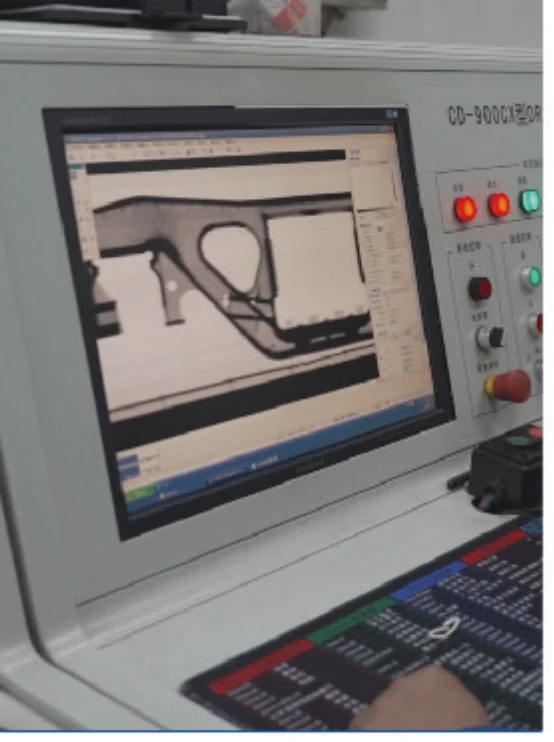
Every casting ships with the factory material certificate, fully compliant with EN 10204 3.1, a heat number and an individual serial number, with NDT reports filed against that serial and heat treatment records tied to the same heat. Internal soundness is verified by 9MeV industrial CT/DR on the sections that require it rather than assumed from a clean surface. Acceptance follows the standard named on the order, subject to the buyer's own inspection and MTC review, and the records are retained for the contract period so a casting can be traced from the field back to its pour.
This traceability is the practical answer to the question the two routes raise. A buyer who holds the heat number, the certificate and the serial can establish what was made and what was checked, whatever the commercial structure behind the order. Buyers in North America usually start from the railway castings supplier USA and Canada documentation requirements and then apply the four checks above.
Frequently Asked Questions
What is the difference between a casting factory and a sourcing partner?
A factory designs the casting for manufacturability, pours it, machines it, inspects it and signs its own material certificate and NDT reports; a sourcing partner or trading company buys castings from one or more factories and resells them. The commercial difference shows up in four places: drawing review, certification signatures, tooling cost and delivery liability. SIMIS is on the sourcing side of that line, and we would rather a buyer knew that from the first page than from the purchase order.
Who signs the material certificate and the NDT report?
At a factory, the foundry itself signs the EN 10204 3.1 material certificate and issues the NDT report against the heat number and serial, because it performed the melting, heat treatment and inspection. At a trading company, the certificate is issued by the underlying foundry and passed through, so the buyer must confirm the named manufacturer on the document before relying on it.
Who owns the tooling for my casting?
Normally the customer, because the pattern or die is made to that customer's drawing and is paid for by that customer; with a factory this is normally a separate pattern development item quoted as tooling, and with a trading company the intermediary often quotes it as part of the piece price. The commercial consequence is that a new foundry needs a new pattern, so the tooling position should be stated in writing before the order is placed.
Who carries the delivery risk?
The entity named on the order. If the contract is with a factory, the factory is responsible for the casting meeting the drawing, the certification and the delivery date; if the contract is with a trading company, the trading company holds the customer contract and passes the foundry's terms down, so the buyer should check how non-conforming castings and late delivery are handled before signing. How we handle it, for the record: a casting that fails inspection is corrected at the producing works, at that works' own cost, and quality responsibility does not transfer to the buyer on delivery; a late delivery is SIMIS's, because the contract with you is ours. We would rather write that down than let you work it out.
Related Reading
- railway casting company profile
- manufacturing process
- railway casting RFQ checklist
- railway castings supplier USA and Canada
- railway casting manufacturer China
- how to order railway castings from China
Request a Quotation
Send your drawing, the applicable standard, the annual volume and the target market to sales@simisrail.com. SIMIS confirms receipt within 1 working day and returns a quotation within 3 working days, stating the casting route, the inspection scope, the tooling position, indicative lead time and MOQ. Contact Felix on WhatsApp at +86-13934165890.
Technical Review
For a question on choosing between a factory and a trading company, contact Felix at sales@simisrail.com or +86-13934165890.