
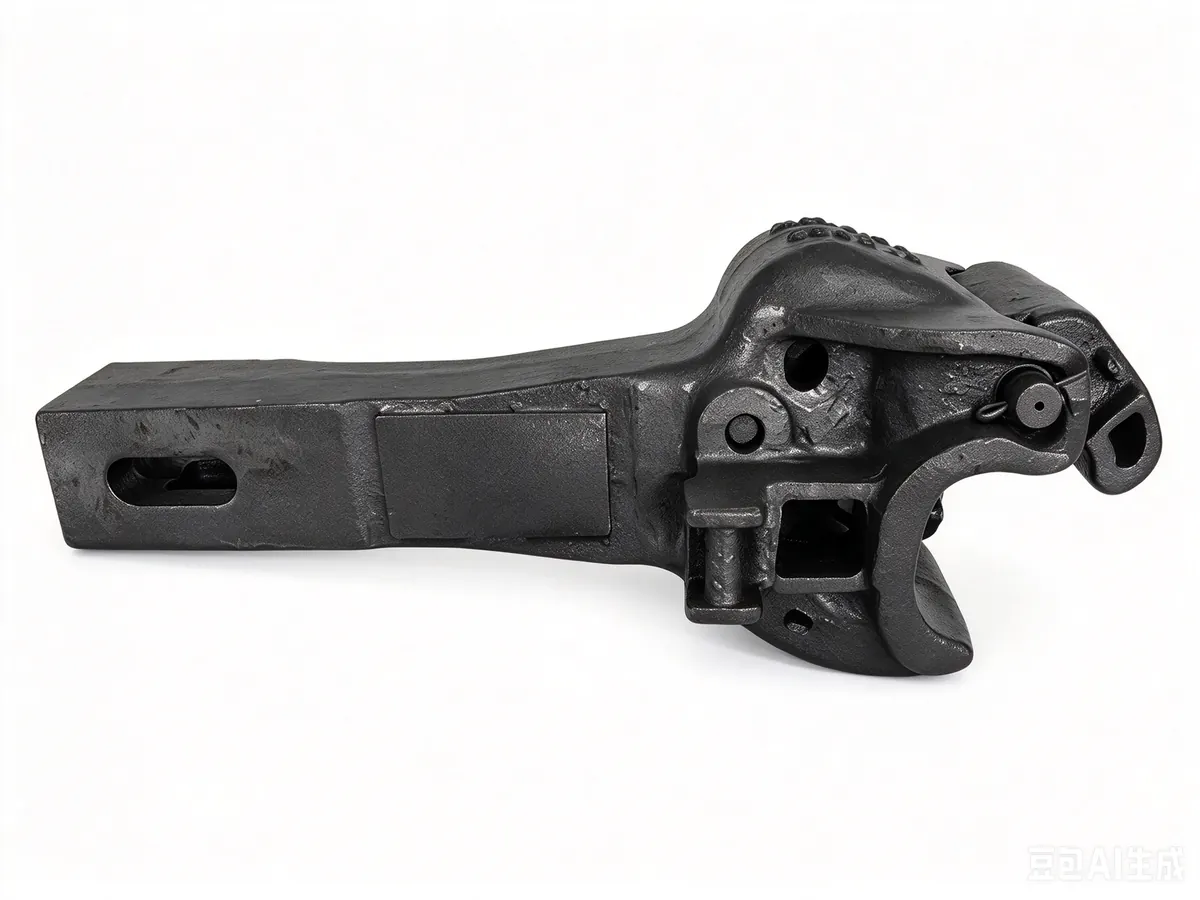
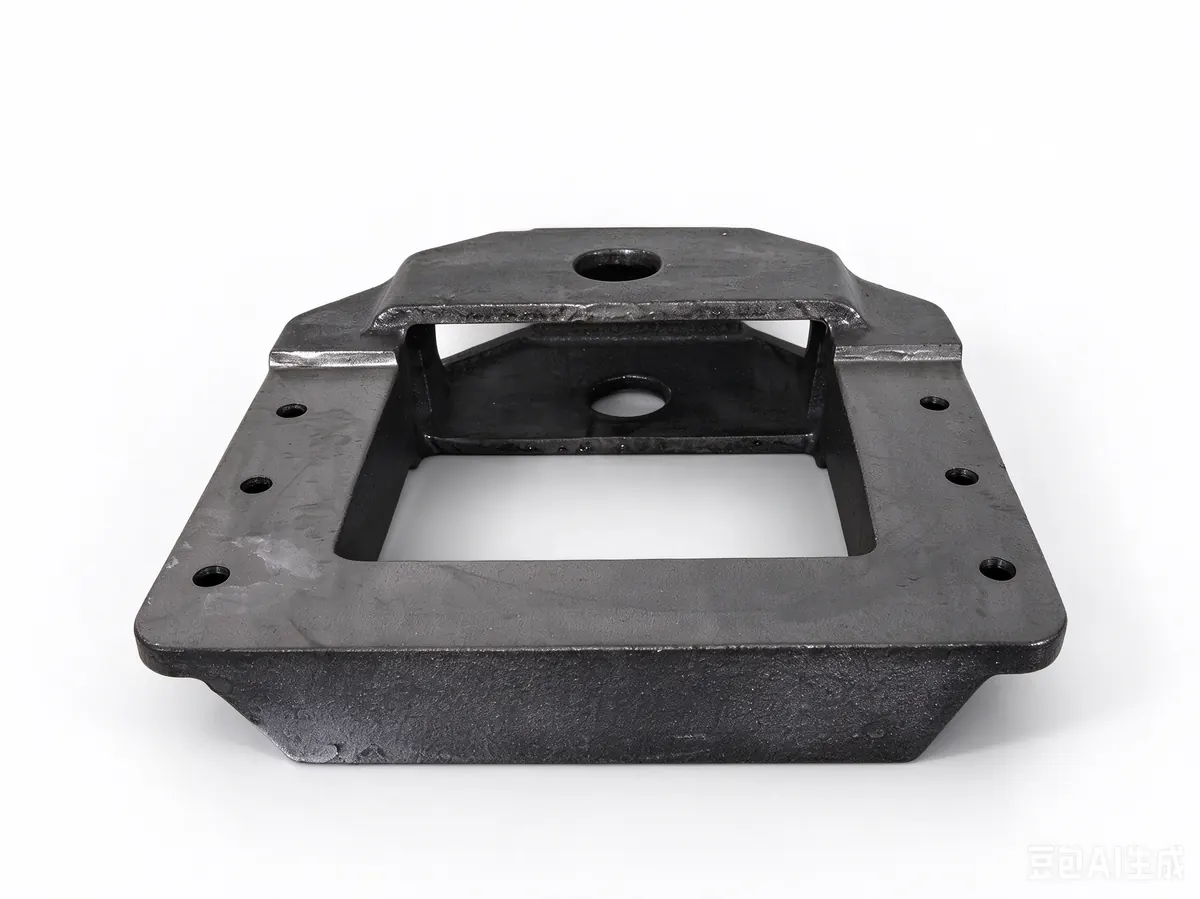
Product
Coupler Striker Castings
Coupler striker castings, also called impact seat, striking seat or impact plate, carry the coupler draft load into the drag box. Grade C steel, with the factory material certificate.
The casting is written on drawings and in purchase orders as the impact plate, and on AAR practice as the coupler striker or the striking seat; all three name the same part behind the coupler. The naming point matters when an enquiry arrives against a Chinese drawing, because the impact plate on that drawing is quoted as a coupler striker casting.
Coupler Striker Castings Overview
A coupler striker casting is the heavy cast steel block that sits behind the coupler, carries the draft and buff load into the drag box and locates the coupler carrier. The formal name in the AAR system is coupler striker; impact seat is the trade name used in GOST practice and in Russia and CIS purchasing, and striking seat and coupler impact seat are variants of the same word. As a China coupler striker casting supplier, SIMIS Precision Casting Co., Ltd. quotes the part against your drawing with the factory material certificate, fully compliant with EN 10204 3.1, and buyers approach us as a coupler striker casting factory for AAR M-215 and GOST 32400-2013 programmes.
Technical Parameters
| Item | Specification |
|---|---|
| Material | ZG25MnCrNi / Grade C, wear plate grade for carrier |
| Process | V-process and resin sand casting, normalized and tempered |
| Standards | AAR M-215, AAR M-269, AAR M-201, GOST 32400-2013 |
| Documentation | Factory-issued material certificate, fully compliant with EN 10204 Type 3 content, issued with each batch against the heat number |
| Typical coupler types | Type E, Type F, 13B and equivalent |
| Lead time (indicative) | confirmed in the quotation |
| MOQ | indicative, confirmed in the quotation |
Striker and Impact Seat Reference
| Designation | Formal status | Standard | Material | Note |
|---|---|---|---|---|
| Coupler striker | Formal name in the AAR system | AAR M-215 / M-201 | Grade C (ZG25MnCrNi) | Cast steel block carrying coupler load into the drag box |
| Impact seat | Trade and colloquial name, common in GOST and CIS practice | GOST 32400-2013 | Grade C (ZG25MnCrNi) / 20GFL | Same casting, called by the local trade name |
| Striking seat | Alternative trade wording | GOST 32400-2013 | Grade C (ZG25MnCrNi) / 20GFL | Same casting, wording used in some specifications |
| Coupler impact seat | Descriptive wording in enquiries | Buyer drawing | Per drawing | Same casting; often quoted against a number stamped on the old block |
| Coupler striker wear plate | AAR M-269 non-metallic wear element | AAR M-269 | wear plate grade | Replaceable sliding element, supplied as a matched set |
Equivalent Material Grade Map
Coupler castings use the toughest grades in the AAR system because they absorb the highest shock loads at the lowest section thickness. This table maps AAR Grade E onto the Chinese and Russian equivalents used for 13B, 17, Type E and SA-3 coupler bodies, and shows why the draft gear components use a different grade from the coupler body.
| Casting / Application | Standard system and grade | Tensile / Yield | Elongation | Impact | Chinese grade | Russian grade | Notes |
|---|---|---|---|---|---|---|---|
| Coupler body, Type E and F | AAR Grade E | 825 MPa / 690 MPa | 14% | - | ZG29MnMoNi | - | Tension and impact at the knuckle |
| Coupler knuckle | AAR Grade E | 825 MPa / 690 MPa | 14% | - | ZG29MnMoNi | - | M-216 fatigue qualified |
| Coupler yoke, 13B and 17 | AAR Grade E at the shank | 825 MPa / 690 MPa | 14% | - | ZG29MnMoNi | - | M-205 test compliance |
| Coupler lock, thrower, lock lifter | Controlled hardness carbon steel | 500 MPa typical | 18% | - | ZG270-500 | - | Small wear and locking parts |
| Draft gear housing, MT-2 and MT-3 | AAR Grade B+ | 550 MPa / 295 MPa | 22% | - | ZG25MnCrNi | GS20Mn5 (1.6220) | Duplex refined steel for shock absorption |
| Coupler striker (impact seat) | AAR Grade C | 620 MPa / 415 MPa | 22% | - | ZG25MnCrNi / ZG25MnCrNiMo | 20GFL | Carries coupler draft load into the drag box |
| Follower seat, front and rear (draft lug) | AAR Grade C | 620 MPa / 415 MPa | 22% | - | ZG25MnCrNi / ZG25MnCrNiMo | 20GFL | Welded base casting on the centre sill |
| Coupler carrier wear plate | AAR M-269 non-metallic performance spec | wear plate grade | - | - | ZG230-450 with wear insert | - | Replaceable wear element |
Important. The AAR standards covering secondhand couplers and reconditioned side frames and bolsters do not apply to new castings, and must not be cited on a new part quotation.
Material and Process
The coupler striker casting is poured in ZG25MnCrNi matched to AAR Grade C, whose 620 MPa tensile and 415 MPa yield with 22% elongation give the block the ductility to carry buff loads into the drag box without brittle failure. SIMIS casts on the V-process and resin sand lines and normalises and tempers each striker, then machines the carrier pocket and wear-plate seat. The Grade C chemistry and controlled heat treatment keep the block tough at the loaded faces while the AAR M-269 wear plate handles the sliding contact. For orders written as impact seat, the casting route, the heat treatment cycle and the acceptance documents are identical to a coupler striker order.
Traceability and Documentation
Every striker ships with the factory material certificate, fully compliant with EN 10204 3.1 recording the heat number, heat-treatment cycle and mechanical test results. A single-piece serial number is stamped on the striker and linked to the heat number for full ladle-to-piece traceability. The carrier wear plate is recorded under the same certificate when supplied as a set. NDT records (UT and MT) are filed per piece and released with the package.
Quality Inspection
Internal soundness is confirmed by 9MeV industrial DR/CT volumetric scanning, resolving discontinuities at the loaded section and pocket. Each striker is then inspected by UT for internal defects and MT for surface indications at the machined faces, meeting AAR M-215 acceptance limits.
Regional Applications
In North America, strikers are supplied to AAR M-215 and M-269 for Type E, Type F and 13B wagon couplings. In Russia and the CIS, the same casting is ordered as an impact seat for broad-gauge couplings to GOST 32400-2013, with a documented impact record. In South America, mixed AAR fleets draw on the same casting route for coupler carrier renewal.
FAQ
Are an impact seat and a coupler striker the same part? Yes. Coupler striker is the formal name in the AAR system, while impact seat is the trade and colloquial name used in GOST practice and in Russia and CIS purchasing. SIMIS quotes the part as a coupler striker casting in Grade C steel, with 100% UT and MT and the factory material certificate, compliant with EN 10204 3.1.
What load does a coupler striker casting carry? It is the cast steel block that sits behind the coupler and carries the draft and buff load into the drag box, locating the coupler carrier. SIMIS casts it in Grade C steel (ZG25MnCrNi) with 100% UT and MT and the factory material certificate, compliant with EN 10204 3.1.
How does a coupler striker differ from a follower plate or a follower seat? The striker carries the coupler load into the drag box and holds the carrier wear plate; the follower plate transmits draft gear travel into the sill; the follower seat is the static base welded to the centre sill. All three are separate castings, and only the striker is sold as an impact seat.
Can the coupler striker wear plate be supplied with the striker? Yes. SIMIS supplies the AAR M-269 coupler carrier wear plate as a matched set, so the wear element and its backing block are renewed together under one factory material certificate compliant with EN 10204 3.1.
Are Type E, Type F and 13B coupler castings supplied from existing patterns? Type E, Type F and 13B coupler bodies, knuckles and yokes are covered on their own pages; this coupler striker casting is quoted against your drawing, with tooling confirmed in the quotation.
Related Products and Resources
- draft gear follower plate casting
- railway follower seat casting
- railway coupler and draft gear castings
Request a Quotation
Send your striker drawing, drawing number or part number, or the standard reference, to sales@simisrail.com. SIMIS confirms receipt within 1 working day and issues a quotation within 3 working days, with indicative lead time and MOQ confirmed in the quotation. Buyers who order the part under its impact seat name receive the same casting route and the same certificate package, so the quotation can be read directly against a GOST order. Contact Felix at +86-13934165890 for engineering discussion.
Related products
More railway coupler and draft gear castings for freight wagons
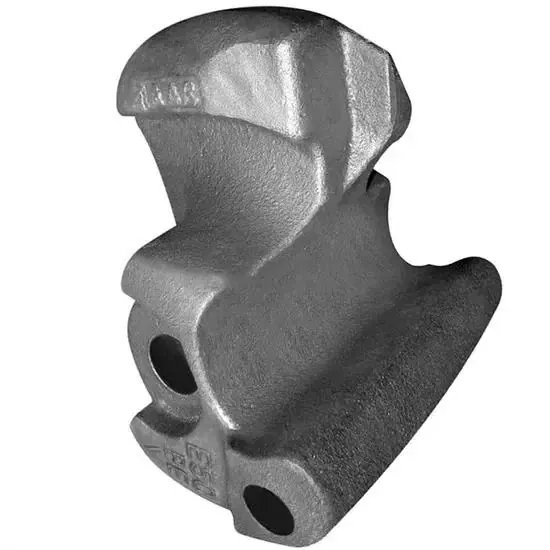
Coupler Knuckle Castings
View the coupler knuckle castings page →
Coupler Lock and Knuckle Thrower Castings
View the coupler lock and knuckle thrower castings page →Back to Railway Coupler and Draft Gear Castings for Freight Wagons