
Product
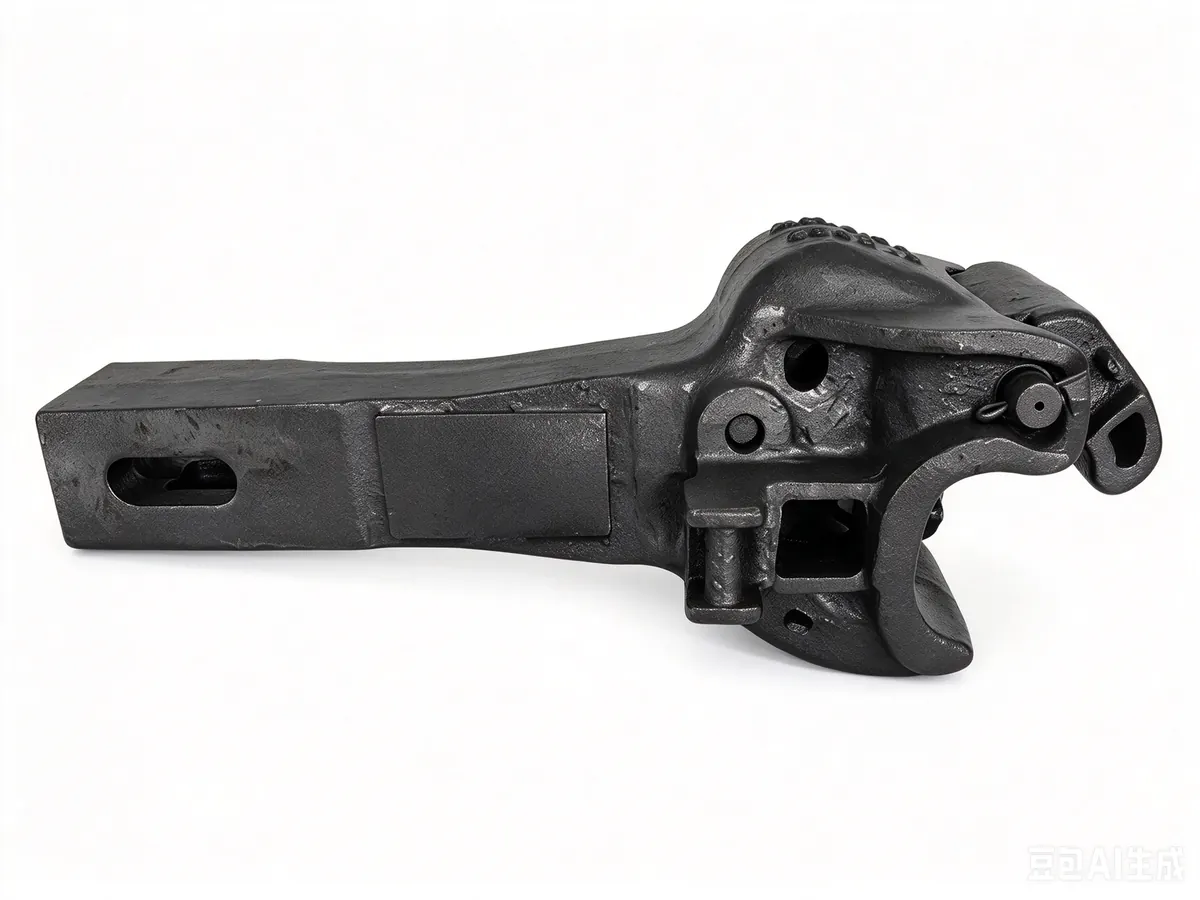
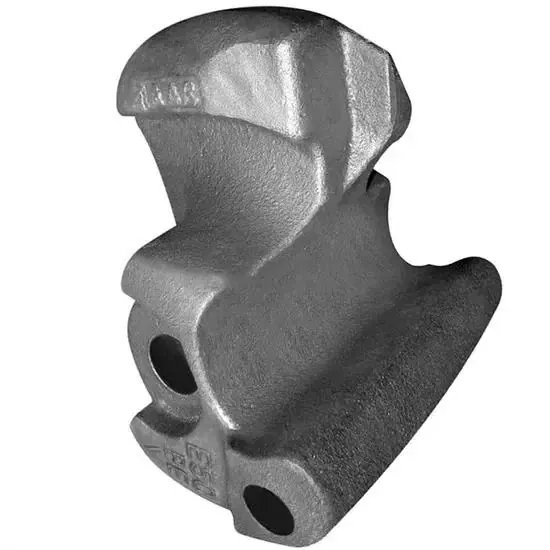
Coupler Knuckle Castings
Type E, Type F, 13B and SA-3 coupler knuckle castings with ready patterns/tooling, cutting pattern cost and lead time. Grade E steel, M-216 fatigue.
Coupler Knuckle Castings Overview
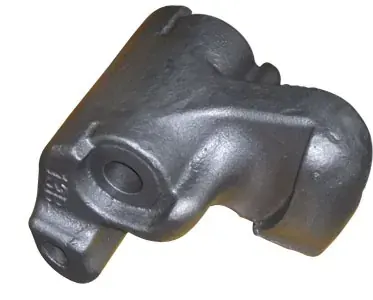
SIMIS provides AAR Type E, Type F, 13B, and Russian SA-3 coupler castings with ready patterns/tooling, significantly eliminating pattern development costs and shortening lead times for global railcar builders. Our coupler knuckle casting is poured in ZG29MnMoNi equivalent to AAR Grade E steel, qualified to the AAR M-216 fatigue test and verified by 100% MT and UT, with the factory material certificate, fully compliant with EN 10204 3.1. Knuckles cover Type E, Type F, 13B and SA-3 systems for North American, South American and MEA operators. Buyers looking for a coupler knuckle casting factory or a China coupler knuckle casting supplier work with SIMIS Precision Casting Co., Ltd., which quotes every knuckle from the drawing and marks each knuckle to its coupling system.
Technical Parameters
| Item | Specification |
|---|---|
| Material | ZG29MnMoNi equivalent to AAR Grade E |
| Process | V-process vacuum sand casting, normalized and tempered, 100% MT and UT |
| Standards | AAR M-211, AAR M-216, AAR M-215 |
| Documentation | Factory-issued material certificate, fully compliant with EN 10204 Type 3 content, issued with each batch against the heat number |
| Typical coupler types | Type E, Type F, 13B, SA-3 |
| Lead time (indicative) | confirmed in the quotation |
| MOQ | indicative, confirmed in the quotation |
| Pattern Status | Type E / Type F / 13B / SA-3 — Active |
Knuckle Model Reference
| Model | System / standard | Material | Application note |
|---|---|---|---|
| Type E knuckle | AAR M-211 / M-216 | Grade E (ZG29MnMoNi) | General-service E coupler latch |
| Type F knuckle | AAR M-211 / M-216 | Grade E (ZG29MnMoNi) | Heavy-haul F coupler latch |
| 13B knuckle | AAR / GB reference | Grade E (ZG29MnMoNi) | Chinese-standard wagon knuckle |
| SA-3 knuckle | GOST 32400-2013 | Grade E (ZG29MnMoNi) | Russian 1520 mm automatic coupler |
Equivalent Material Grade Map
Coupler castings use the toughest grades in the AAR system because they absorb the highest shock loads at the lowest section thickness. This table maps AAR Grade E onto the Chinese and Russian equivalents used for 13B, 17, Type E and SA-3 coupler bodies, and shows why the draft gear components use a different grade from the coupler body.
| Casting / Application | Standard system and grade | Tensile / Yield | Elongation | Impact | Chinese grade | Russian grade | Notes |
|---|---|---|---|---|---|---|---|
| Coupler body, Type E and F | AAR Grade E | 825 MPa / 690 MPa | 14% | - | ZG29MnMoNi | - | Tension and impact at the knuckle |
| Coupler knuckle | AAR Grade E | 825 MPa / 690 MPa | 14% | - | ZG29MnMoNi | - | M-216 fatigue qualified |
| Coupler yoke, 13B and 17 | AAR Grade E at the shank | 825 MPa / 690 MPa | 14% | - | ZG29MnMoNi | - | M-205 test compliance |
| Coupler lock, thrower, lock lifter | Controlled hardness carbon steel | 500 MPa typical | 18% | - | ZG270-500 | - | Small wear and locking parts |
| Draft gear housing, MT-2 and MT-3 | AAR Grade B+ | 550 MPa / 295 MPa | 22% | - | ZG25MnCrNi | GS20Mn5 (1.6220) | Duplex refined steel for shock absorption |
| Coupler striker (impact seat) | AAR Grade C | 620 MPa / 415 MPa | 22% | - | ZG25MnCrNi / ZG25MnCrNiMo | 20GFL | Carries coupler draft load into the drag box |
| Follower seat, front and rear (draft lug) | AAR Grade C | 620 MPa / 415 MPa | 22% | - | ZG25MnCrNi / ZG25MnCrNiMo | 20GFL | Welded base casting on the centre sill |
| Coupler carrier wear plate | AAR M-269 non-metallic performance spec | wear plate grade | - | - | ZG230-450 with wear insert | - | Replaceable wear element |
Important. The AAR standards covering secondhand couplers and reconditioned side frames and bolsters do not apply to new castings, and must not be cited on a new part quotation.
Material and Process
The coupler knuckle casting is poured in ZG29MnMoNi matched to AAR Grade E, whose 825 MPa tensile and 690 MPa yield with 14% elongation give the latch the toughness to absorb impact at the coupling point. SIMIS casts on the German HWS V-process vacuum sand line, which yields a clean, uniform surface at the lock face and hub radii where fatigue cracks would otherwise start. After normalising and tempering, each knuckle is CNC-machined at the pivot and lock surfaces. The V-process rigidity keeps the section thickness uniform through the thin hub, supporting the fatigue qualification.
Traceability and Documentation
Every knuckle ships with the factory material certificate, fully compliant with EN 10204 3.1 recording the heat number, heat-treatment cycle and mechanical test results. A single-piece serial number is stamped on the knuckle and linked to the heat number, enabling full ladle-to-piece traceability. The NDT records (MT and UT) are filed per piece and released with the certificate package.
Quality Inspection
Internal soundness is confirmed by 9MeV industrial DR/CT volumetric scanning, resolving discontinuities inside the hub that surface testing misses. Each knuckle is then inspected by MT for surface-breaking indications at the lock face and by UT for internal defects, meeting the AAR knuckle acceptance limits.
Regional Applications
In North America, knuckles are supplied to the AAR knuckle specification for Type E and Type F wagon builders. In South America, mixed AAR and broad-gauge fleets use the same active tooling for Type E, 13B and SA-3 knuckles. In the Middle East and Africa, SA-3 and AAR knuckles support both 1435 mm and 1520 mm gauge operations.
FAQ
What does the AAR M-216 fatigue test prove for a knuckle? AAR M-216 proves a coupler knuckle casting survives the specified cyclic draft and buff loading without failure, confirming the Grade E steel and heat treatment deliver the required fatigue strength at the lock face and hub. SIMIS qualifies knuckles to M-216 with the factory material certificate, fully compliant with EN 10204 3.1.
Can knuckles be mixed between Type E and Type F systems? Knuckles are not freely mixed: Type E and Type F knuckles share geometry at the head but differ in the draft interface, so interchange must follow the coupling system specification. SIMIS supplies both from active patterns and marks each knuckle to its system.
Why do knuckles crack near the lock face? Cracks initiate at the lock face and hub radii where cyclic stress concentrates and surface finish is critical. SIMIS controls these radii by V-process casting and verifies them by 100% MT plus 9MeV DR/CT to confirm internal soundness.
Are Type E and Type F knuckles supplied from existing patterns? Yes. Type E, Type F, 13B and SA-3 knuckle tooling is active, eliminating pattern development cost. Knuckles for other models are quoted as mould development required.
Related Products and Resources
Request a Quotation
Send your knuckle drawing, drawing number or part number, or the standard reference, to sales@simisrail.com. SIMIS confirms receipt within 1 working day and issues a quotation within 3 working days, with indicative lead time and MOQ confirmed in the quotation. If you are sourcing this part from a China factory, we quote from the drawing rather than from a stock list, so the fatigue qualification and the marking of each knuckle to its coupling system are covered by the same document. Contact Felix at +86-13934165890 for engineering discussion.
Product photos
Related products
More railway coupler and draft gear castings for freight wagons
Coupler Lock and Knuckle Thrower Castings
View the coupler lock and knuckle thrower castings page →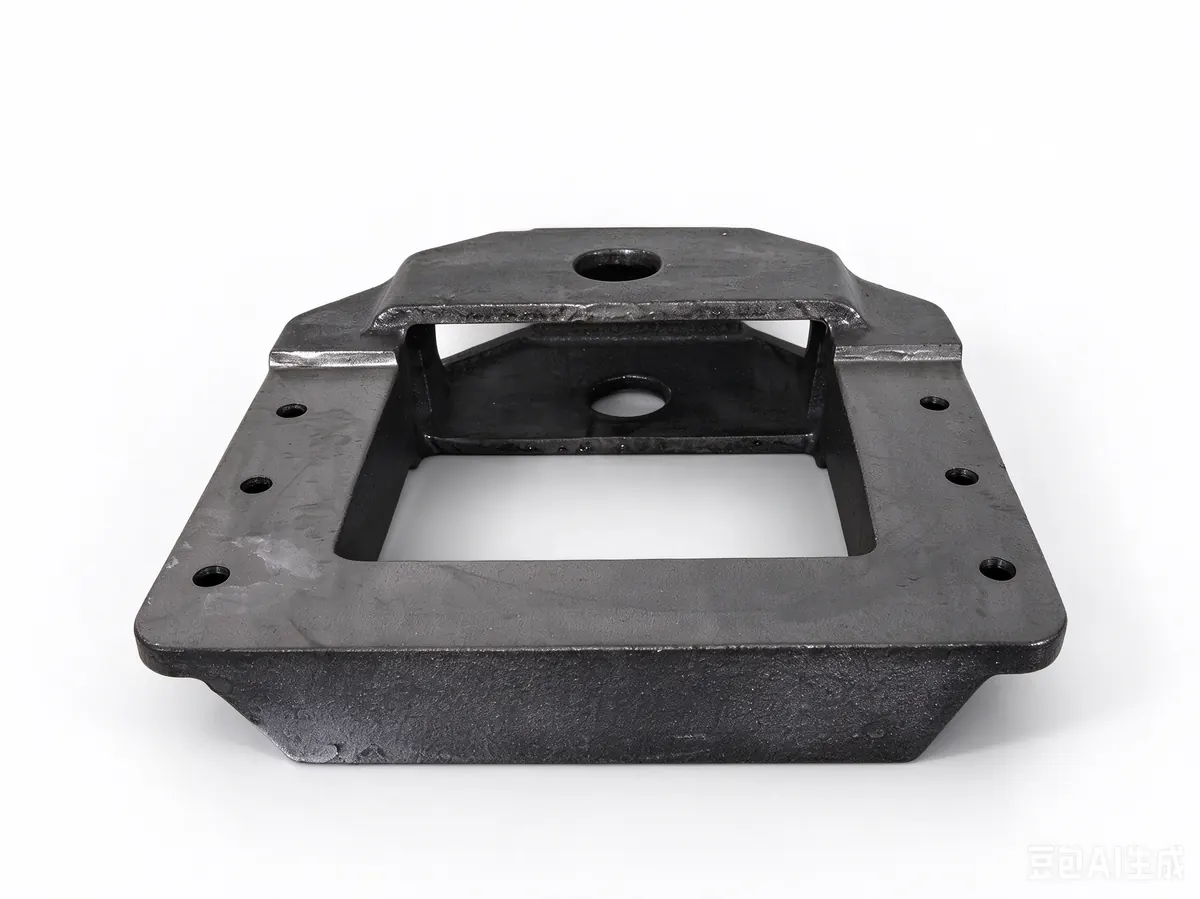
Coupler Striker Castings
View the coupler striker castings page →Back to Railway Coupler and Draft Gear Castings for Freight Wagons