
Blog
Railway Casting Technical Notes — Page 3 of 6
Engineering notes on material equivalency, standards, casting failure and process control — the questions that surface after the first RFQ, answered in advance.
Blog
47 technical notes — Page 3 of 6
Practical answers for buyers of railway cast steel — eight notes per page.
- Failure & inspection
Coupler Will Not Open? Thrower, Lock and Lock Lifter Explained
A freight coupler that will not open usually fails at the lock, lock lifter or thrower. Learn the inspection order and which small parts to
- Standards & materials
EN 13749 and EN 15827: Why EU Bogies Use Fewer Castings
EN 13749 and EN 15827 define EU bogie frame and running-gear requirements. Learn why European freight bogies are welded and where castings s
- Quality & inspection
Evaluate a Railway Casting Supplier: M-1003 Audit Checklist
Before awarding railway casting orders, audit the supplier's AAR M-1003 quality system, NDT capability and traceability. Use this 12-questio
- Standards & materials
Follower Plate vs Follower Block: The Draft Gear Stack
The follower plate and follower block sit between the draft gear housing and the yoke. Learn which part travels, how it affects gear travel,
- Failure & inspection
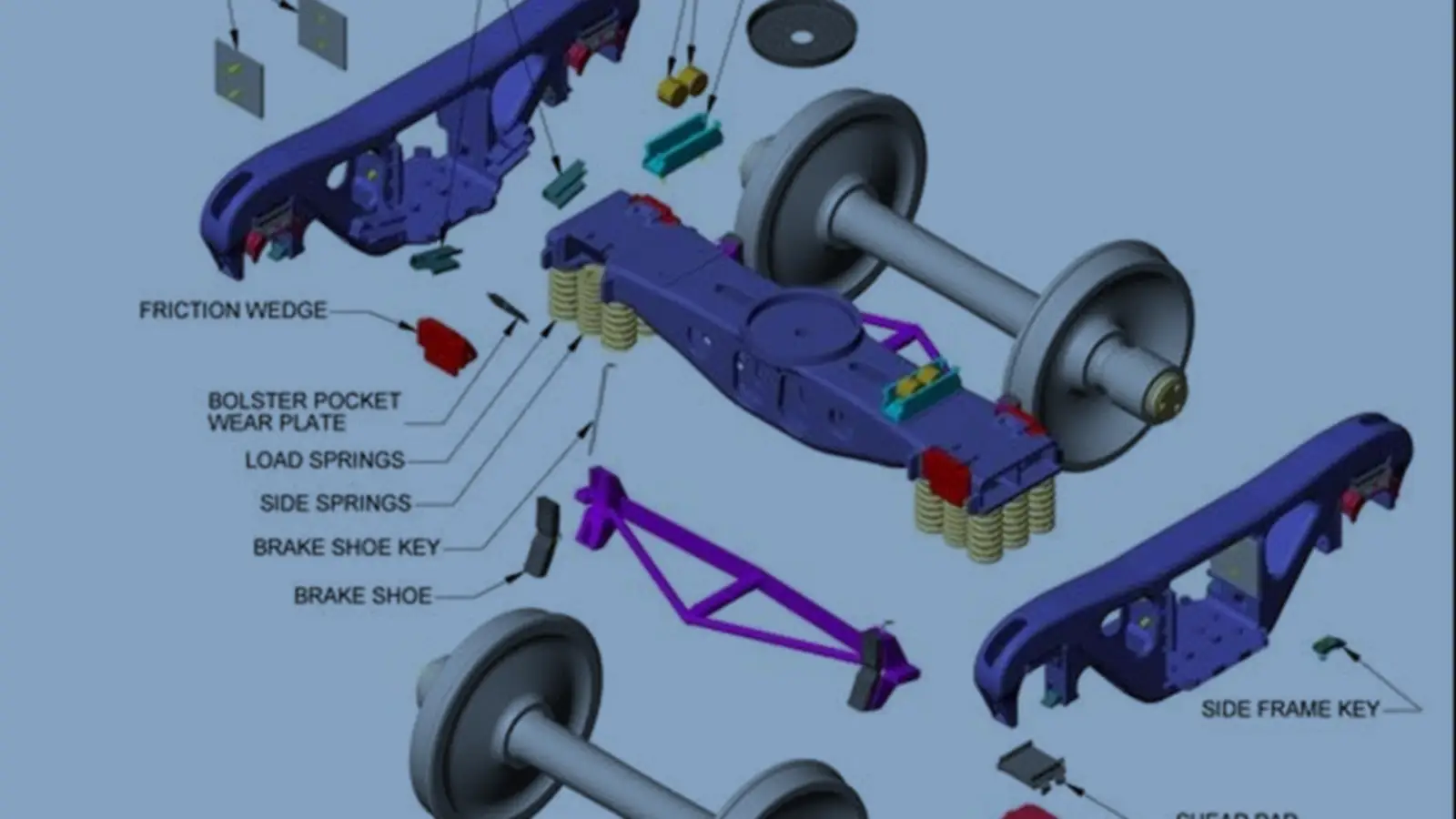
Friction Wedge Failure: Why ADI Wedges Crack or Wear Flat
Friction wedges fail by body crack, flat wear, grooving or spalling. Compare ADI Grade 900 and ZGMn13, and learn how to measure wedge wear a
- Process & products
German HWS V-Process Casting for Heavy Castings
What V-process casting is and why heavy railway castings use it. V-process vs resin sand and lost foam, and the German HWS automated line.
- Standards & materials
GOST 32400-2013 Cast Steel at -60°C for 18-100 Side Frames
GOST 32400-2013 low-temperature impact for 18-100 side frames. Why 20GFL steel holds toughness at -60°C and how to verify the qualification.
- Standards & materials
GOST 32400-2013 Explained for the CIS Market
GOST 32400-2013 defines the technical requirements for cast steel side frames and bolsters on 1520 mm freight bogies. Learn its scope and gr