
Product
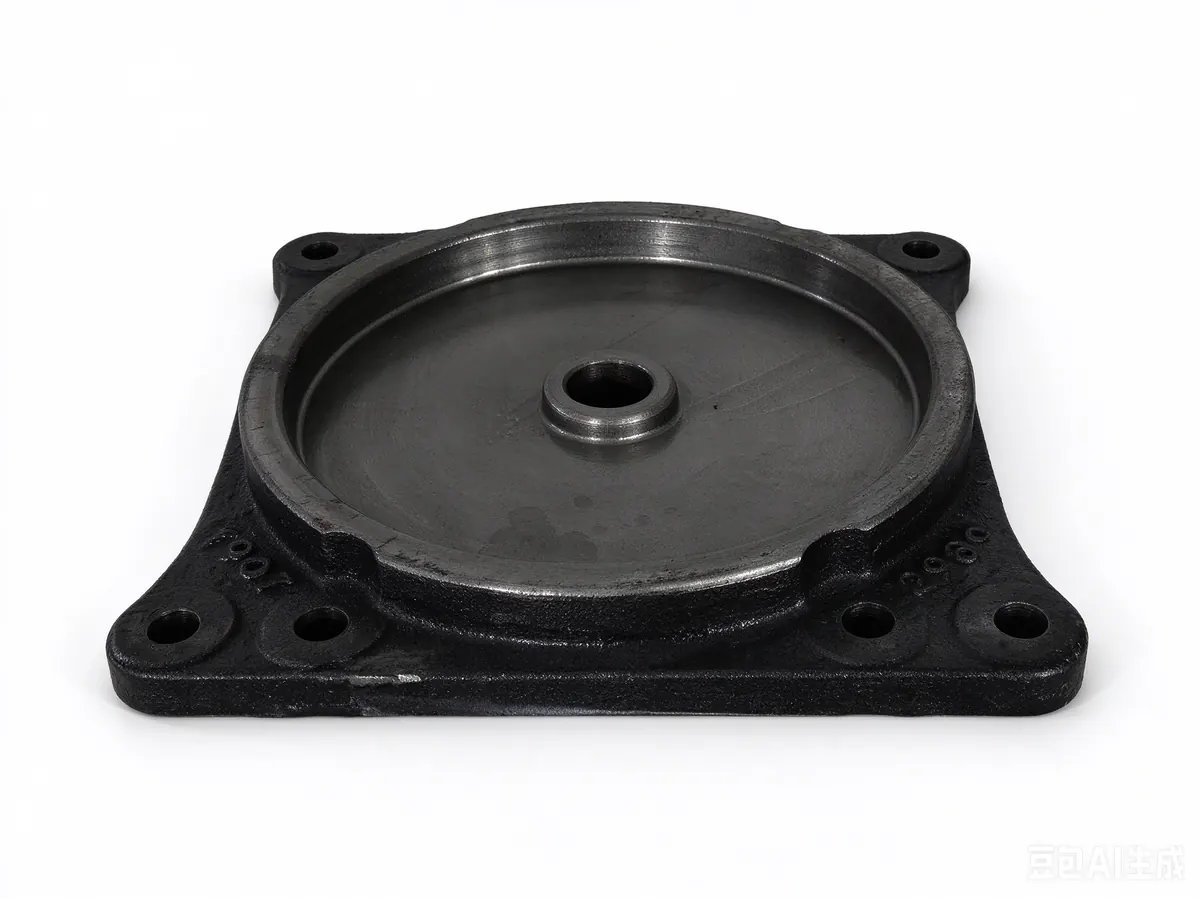
Railway Center Plate Castings
Railway center plate castings in ZG25MnNi and ZG270-500 with matched wear rings for 70T, 125T and 18-100 bogies. Wear limits and heat lot traceability.
The lower bowl of this family is also written as the center bearing on Chinese drawings and in domestic purchase orders, because it is the plate the car body pivots on. It is the same casting as the lower center plate, and it is quoted as a center plate casting against the drawing number given.
Railway Center Plate Castings Overview
A railway center plate casting is the bottom center plate, also called the lower center plate, forming the lower half of the body-to-bogie pivot on a three-piece freight wagon bogie. It carries the full vertical body load, so the machined bowl must stay dimensionally exact. SIMIS Precision Casting Co., Ltd. runs the railway center plate casting factory, casting ZG25MnNi and ZG270-500 with matched wear rings to AAR M-201, and as a China railway center plate casting supplier issues factory material certificate compliant with EN 10204 3.1 for every heat.
Railway Center Plate Casting Specifications
| Item | Specification |
|---|---|
| Material | ZG25MnNi (Grade B), ZG270-500 for higher wear duty |
| Process | Resin bonded sand casting; normalized and tempered |
| Standards | AAR M-201, TB/T 2942.1-2020 |
| Documentation | Factory-issued material certificate, fully compliant with EN 10204 Type 3 content, issued with each batch against the heat number |
| Typical bogie types | 70T, 125T (1435 mm); 18-100 (1520 mm) |
| Lead time (indicative) | confirmed in the quotation |
| MOQ | indicative, confirmed in the quotation |
Typical Bogie and Model Coverage
| Bogie model | Gauge | Material | Standard |
|---|---|---|---|
| 70T, 125T | 1435 mm | ZG25MnNi | AAR M-201 / TB/T 2942.1-2020 |
| 18-100 | 1520 mm | ZG25MnNi | AAR M-201 |
| Higher wear duty (any) | any | ZG270-500 | TB/T 2942.1-2020 |
Equivalent Material Grade Map: AAR, GOST, EN and Chinese Grades
AAR Grade, GOST steel grade and Chinese casting grade are not interchangeable labels. This table maps the requirement definitions onto one another so that a buyer holding an AAR drawing, a GOST drawing or a Chinese TB/T drawing can identify the grade supplied in a different system. Equivalence is based on the specified minimum tensile strength, yield strength, elongation and impact energy, and is confirmed against the material certificate for each individual heat.
| Casting / use | Standard system & grade | Tensile / Yield | Elongation | Impact | Chinese grade | Russian grade | Note |
|---|---|---|---|---|---|---|---|
| Side frames and bolsters, low to medium duty | AAR Grade B | 485 MPa / 260 MPa | 24% | 20 J at -7 °C | – | – | Low to medium duty side frames and bolsters |
| 80t heavy-haul bogie members | AAR Grade B+ | 550 MPa / 295 MPa | 22% | 20 J at -18 °C | ZG25MnCrNi | 20GFL | Heavy haul 80t bogies, the mainstream Chinese export grade |
| 100t to 125t axle load and cold climate service | AAR Grade C | 620 MPa / 415 MPa | 22% | 20 J at -18 °C | ZG25MnCrNiMo | 20GFL (vanadium alloyed) | 100t to 125t axle load and cold climate service |
| Type 16 and Type 17 heavy haul coupler bodies | AAR Grade E | 825 MPa / 690 MPa | 14% | not specified by M-201 | ZG29MnMoNi | – | Type 16 and Type 17 heavy haul coupler bodies |
| European axle boxes and brake castings | EN 13749 axle box steel | 490 MPa / 340 MPa | 22% | 27 J at -20 °C | ZG25MnNi | GS20Mn5 (1.6220) | European axle boxes and brake castings |
| CIS bogie castings | GOST 32400-2013 Class 1 | 470 MPa / 320 MPa | 20% | 20 J at -40 °C | ZG25MnNi | 20GL | GOST bogie castings for CIS fleets |
| 18-100 side frame | GOST 32400-2013 Class 2 | 590 MPa / 400 MPa | 18% | 20 J at -60 °C | ZG25MnCrNi | 20GFL | GOST 18-100 side frames, the mainstream CIS export product |
Important. 20GL contains no vanadium and is not permitted for GOST 32400-2013 Class 2 castings. Equivalence is a procurement starting point only; final acceptance follows the material certificate for the delivered heat and the third party inspection.
Material and Casting Process
The center plate is produced by resin bonded sand casting and normalized and tempered. The bowl and critical radii are machined to drawing, while the rest stays cast to net — the balance that holds the one dimension controlling the ride. For high abrasive wear SIMIS upgrades to ZG270-500. Because the bottom plate is only the lower half of the pivot, it is always paired with the mating upper center plate, which belongs to the wagon body and auxiliary castings family; the two are supplied as a matched set so the wear geometry of the pivot stays consistent. See bottom vs top center plate.
Heat Lot Traceability and Documentation
Every railway center plate casting ships with the factory material certificate, fully compliant with EN 10204 3.1 tied to its heat number. The heat number identifies the ladle analysis and the heat treatment cycle, and each plate carries a single-piece serial number so that an incoming inspection can trace it back to its heat and to the corresponding NDT report. Third-party inspection is available on request and recorded against the same serial number.
Inspection and Quality Verification
Internal soundness is verified by 9MeV industrial CT/DR volumetric scanning on request for thick sections, so shrinkage and porosity are detected before machining. Production plates are checked by magnetic particle testing (MT) on the machined contact face and by dimensional layout of the bowl diameter and the locating faces, signed off against the drawing gauge points before release.
Regional Applications
- North America — ZG25MnNi plates to AAR M-201 for 70T and 125T rebuilds, bowl machined to drawing.
- Russia and CIS — 18-100 plates in ZG25MnNi with matched wear rings for broad-gauge fleets.
- Southeast Asia — ZG25MnNi or ZG270-500 plates quoted against the bogie drawing.
FAQ
What is a bottom center plate and what does it carry?
The bottom center plate (railway center plate casting) is the pivot between the wagon body and the bogie bolster; it carries the full vertical body load and lets the body rotate as the bogie steers. Its machined bowl must stay dimensionally exact, because an oversize plate cannot be shimmed out at the body. It is supplied with matched wear rings.
How much diametral wear is allowed before replacement?
The allowable diametral wear follows the wagon maintenance standard and the customer drawing; SIMIS records the as-cast and as-machined bowl diameter on the dimensional report so the wear limit can be checked at each inspection. Replacement is set by the fleet maintenance schedule, not by a generic figure, and is confirmed against the specified limit.
Should center plate and upper center plate be replaced as a pair?
Yes, where the drawing pairs them. The bottom and upper center plates wear as a matched set, so replacing only one changes the wear geometry and the ride height. SIMIS supplies them as a matched pair per wagon or per bogie, keeping the contact face and the wear limit consistent across the vehicle.
Related Products and Resources
Request a Quotation
Send your bogie model with the center plate drawing, drawing number or part number to sales@simisrail.com. SIMIS confirms receipt within 1 working day and returns a quotation within 3 working days, with lead time and MOQ stated as indicative and confirmed in the quotation. Contact Felix at +86-13934165890 for technical discussion.
Related products
More railway bogie castings for heavy-haul freight wagons
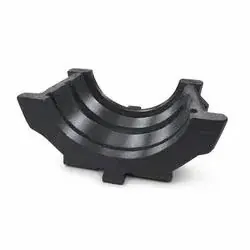
Railway Bearing Adapter Castings
View the railway bearing adapter castings page →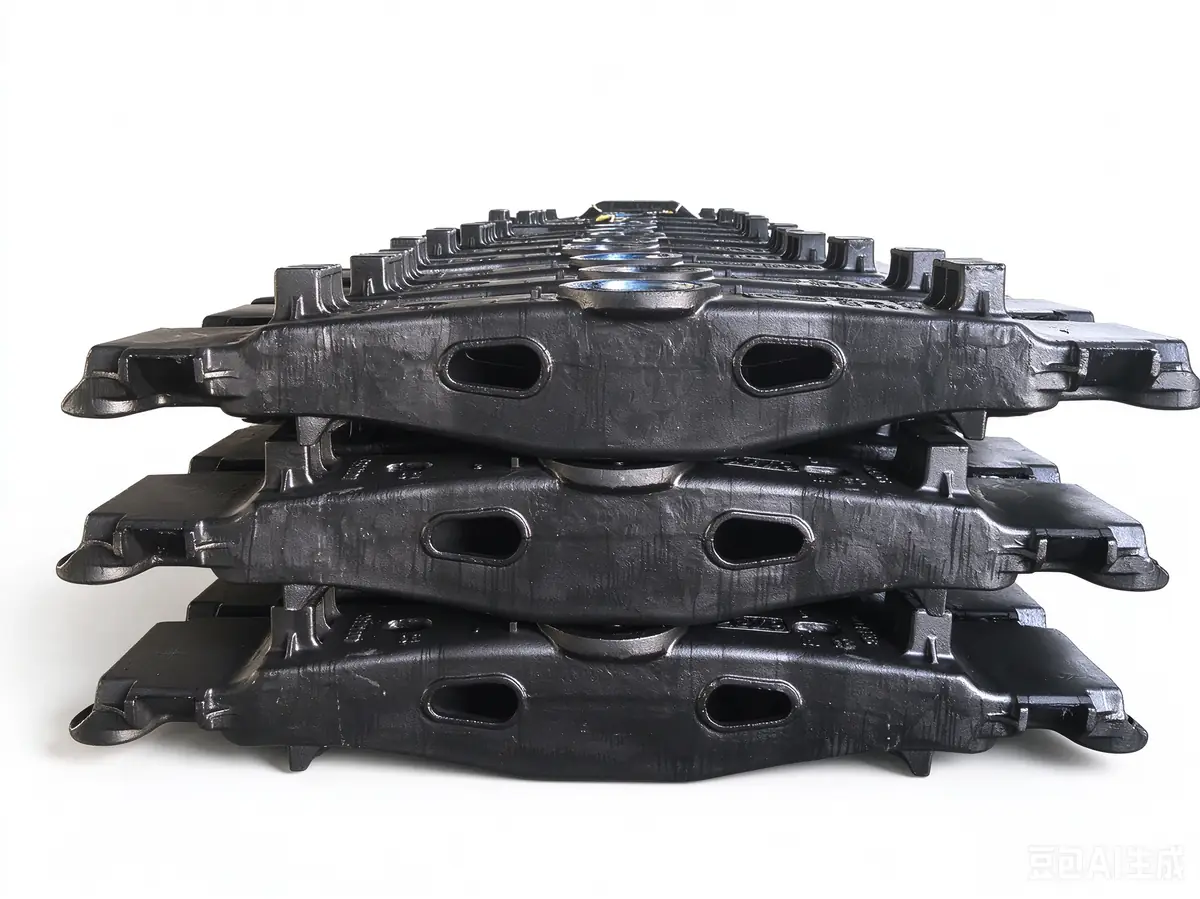
Railway Bolster Castings for Heavy-Haul Freight
View the railway bolster castings for heavy-haul frei page →Back to Railway Bogie Castings for Heavy-Haul Freight Wagons